Mentor:
Fr. Edilberto B. Cepe, C.Ss.R, SSL
Panels:
Sr. Miriam R. Alejandrino, OSB, S.Th.D.
Ms. Crescencia C. Gabijan, Ph.D.
Mr. Danilo S. Agustin, S.Th.L
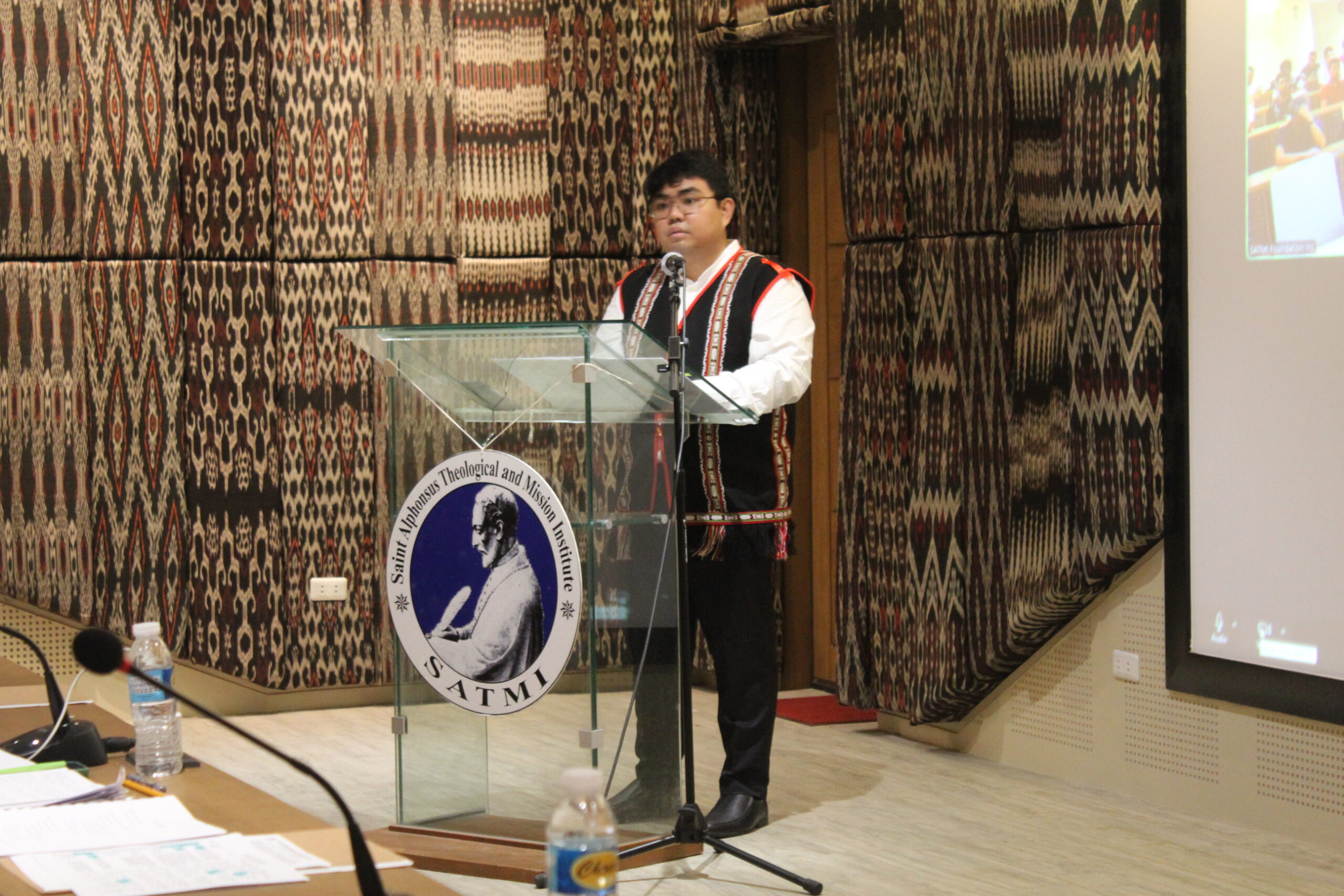
“Many would agree that drinking is one of the easiest ways to connect with people. In almost every other culture, it becomes a privileged space where bonds are formed, conversations deepen, and community ties become stronger. This was no different from what I experienced while living in the villages of Gia Lai Province in Vietnam. Drinking with the Bahnar people was not merely an activity where we consumed alcohol to fulfill our drinking urge. Listening and experiencing it with them helped me understand that it was about belongingness—their way of being hospitable, not only to their guests but also to their fellow tribe members.
Mission is not about bringing God into a culture but about recognizing where God is already revealing Himself. The generous hospitality of God, who welcomes humanity into communion, sends the Church to extend it in the same way—to welcome others. Thus, in the context of the Bahnar, the rượu cần becomes a theological sign, a lived expression of divine hospitality and blessing. The moment they gather around the jar, they are enacting the ritual of communion, revealing that God’s grace is already at work in their culture as it celebrates life, gratitude, and community.” -𝑬𝒙𝒄𝒆𝒓𝒑𝒕 𝒇𝒓𝒐𝒎 𝒕𝒉𝒆 𝒑𝒂𝒑𝒆𝒓 𝒐𝒇 𝑩𝒓. 𝑹𝒚𝒂𝒏
– – – – –
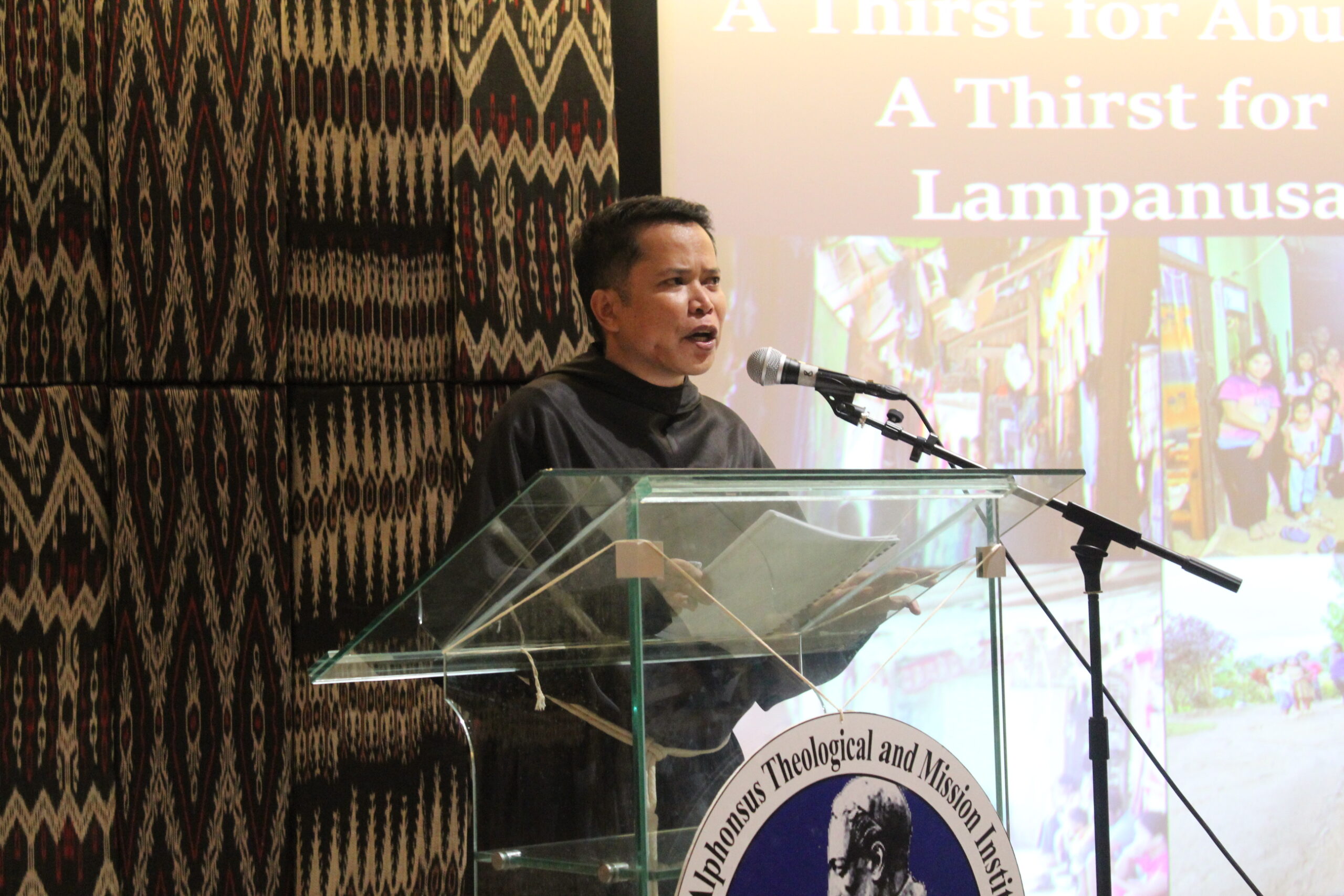
𝐌𝐢𝐬𝐬𝐢𝐨𝐥𝐨𝐠𝐢𝐜𝐚𝐥 𝐏𝐚𝐩𝐞𝐫 𝐏𝐫𝐞𝐬𝐞𝐧𝐭𝐚𝐭𝐢𝐨𝐧 𝐨𝐟 𝐁𝐫. 𝐌𝐞𝐥𝐜𝐡𝐨𝐫 𝐏. 𝐈𝐲𝐚𝐬, 𝐓𝐎𝐑, 𝐞𝐧𝐭𝐢𝐭𝐥𝐞𝐝: “𝐀 𝐓𝐡𝐢𝐫𝐬𝐭 𝐟𝐨𝐫 𝐀𝐛𝐮𝐧𝐝𝐚𝐧𝐭 𝐖𝐚𝐭𝐞𝐫, 𝐀 𝐓𝐡𝐢𝐫𝐬𝐭 𝐟𝐨𝐫 𝐉𝐮𝐬𝐭𝐢𝐜𝐞, 𝐀 𝐓𝐡𝐢𝐫𝐬𝐭 𝐟𝐨𝐫 𝐆𝐨𝐝: 𝐀 𝐌𝐢𝐬𝐬𝐢𝐨𝐧 𝐄𝐱𝐩𝐞𝐫𝐢𝐞𝐧𝐜𝐞 𝐢𝐧 𝐋𝐚𝐦𝐩𝐚𝐧𝐮𝐬𝐚𝐧 𝐌𝐢𝐬𝐬𝐢𝐨𝐧 𝐒𝐭𝐚𝐭𝐢𝐨𝐧, 𝐁𝐮𝐤𝐢𝐝𝐧𝐨𝐧”
Mentor:
Fr. Neil J. Badillo, OFM, S.Th.D
Panels:
Fr. Edilberto B. Cepe, C.Ss.R, SSL
Ms. Crescencia C. Gabijan, Ph.D.
Mr. Noriel R. Rogon, Ph.D.
“Lampanusan is a barangay in Kalilangan, Bukidnon, where the mission station is located. Two barangays comprise the Lampanusan Mission Station: Lampanusan and Public. Upon my arrival at the Lampanusan Mission Station, the water scarcity in the area was the first thing that immediately disturbed me. I had to bathe and wash my clothes using rainwater for the first time. Since I used to live a life of comfort in the religious community, I indeed had to undergo a significant adjustment. As the mission-immersion progressed, I discovered that many chapels in the surrounding areas were experiencing similar difficult conditions. Experiencing and reflecting on this physical reality, I came to understand that the people of Lampanusan and Public are not only in need of clean, “physical water”, but also of “social water”, a deeper need for justice, as they continue to suffer from the recurring deflation of agricultural products during harvest seasons and “spiritual water”, a more profound need for God, due to the shortage of Church ministers.
I encountered three profound and interconnected realities that I call the “threefold thirst” of the people: the thirst for abundant water, the thirst for justice, and the thirst for God. These thirsts are not abstract concepts but lived experiences that shape the daily struggles and hopes of the communities in Barangays Lampanusan and Public. Water scarcity is a constant challenge. Families depend on rainwater stored in drums, often walking long distances to fetch water from springs. This scarcity affects not only household needs but also agriculture, making farming unpredictable and risky. Alongside this physical thirst is a deep social thirst for justice. Farmers who work tirelessly to cultivate corn and cassava face recurring deflation of agricultural prices during harvest seasons, forcing them into cycles of debt and poverty. Their situation is further threatened by the encroachment of large pineapple corporations, such as DOLE and Del Monte, whose land-leasing practices and monoculture farming compromise both the environment and the farmers’ long-term livelihood. These realities reveal systemic injustices that strip people of dignity and security. Yet, beyond these material and social struggles lies an even deeper thirst—the thirst for God. Despite their hardships, the people of Lampanusan and Public exhibit a vibrant faith, but their spiritual life is hindered by the shortage of ordained and lay ministers.
When the soldier pierced Jesus’ side on the Cross (John 19:34), it was not only His physical body that was opened, but also a revelation of the deep wounds of humanity itself. This piercing, accompanied by the flow of blood and water, symbolizes the ultimate sacrifice Jesus made for humanity’s sins. The injustice, violence, and oppression that placed Him on the Cross mirror the injustices endured by the poor, the exploited, and the marginalized today, like people in Barangay Lampanusan and Public. Jesus’ pierced side mirrors every family pierced by a lack of abundant and accessible water sources, which is why they need to walk long distances just to fetch water, adding difficulties to their daily living. It represents every farmer pierced by the unfair pricing of their harvests, compelled to live with the cycle of debts, gradually leading to severe poverty. Moreover, it represents the cry of communities pierced by the entry of big corporations that displace local livelihoods and are progressively ruining the sound quality of their soil, which they have taken good care of for a long time. It also mirrors the pierced souls of the people in Lampanusan and Public’s longing for sufficient numbers of church ministers to hear the Word of God and satisfy their yearning for God’s presence.
As mentioned earlier, I was tasked to revive Basic Ecclesial Communities, but the people requested house-to-house Gospel sharing instead. This simple yet profound approach rekindled faith, drew people back to Sunday Mass, and revealed their eagerness to encounter God’s Word. Their questions during these visits—about suffering, morality, and God’s justice—showed a deep longing for guidance and meaning. This experience taught me that mission cannot be limited to preaching; it must be holistic, addressing both spiritual and socio-economic realities. Using the See–Judge–Act framework, I reflected on these thirsts in light of Scripture, where “thirst” symbolizes humanity’s deepest longing for life, justice, and God. Jesus’ words on the Cross, “I thirst,” resonate with the cry of the people of Lampanusan and Public. The Church is called to respond by becoming a living water—through pastoral presence, advocacy for justice, and concrete action. This involves developing sustainable water systems, empowering farmers through cooperatives and fair trade practices, and cultivating lay leaders to sustain faith communities. It also means prophetic courage to challenge unjust structures and stand in solidarity with the poor.
Personally, this mission immersion was transformative for me. It deepened my understanding of priestly vocation as not only administering sacraments but also walking with the marginalized, advocating for their dignity, and embodying the Gospel in action. I realized that true evangelization is not just proclamation but incarnation—allowing the Word to take flesh in acts of love, justice, and hope. In the resilience and faith of the people of Lampanusan and Public, I encountered Christ Himself. In that encounter, I rediscovered the essence of mission: to be a channel of God’s living water, quenching the thirst of those who long for life, justice, and God.” -𝑬𝒙𝒄𝒆𝒓𝒑𝒕 𝒇𝒓𝒐𝒎 𝒕𝒉𝒆 𝒑𝒂𝒑𝒆𝒓 𝒐𝒇 𝑩𝒓. 𝑴𝒆𝒍𝒄𝒉𝒐𝒓
– – – – –
Mentor:
Fr. Neil J. Badillo, OFM, S.Th.D
Panels:
Fr. Edilberto B. Cepe, C.Ss.R, SSL
Ms. Ma. Isabel S. Actub, Ph.D.
Mr. Roawie L. Quimba, Ph.D.
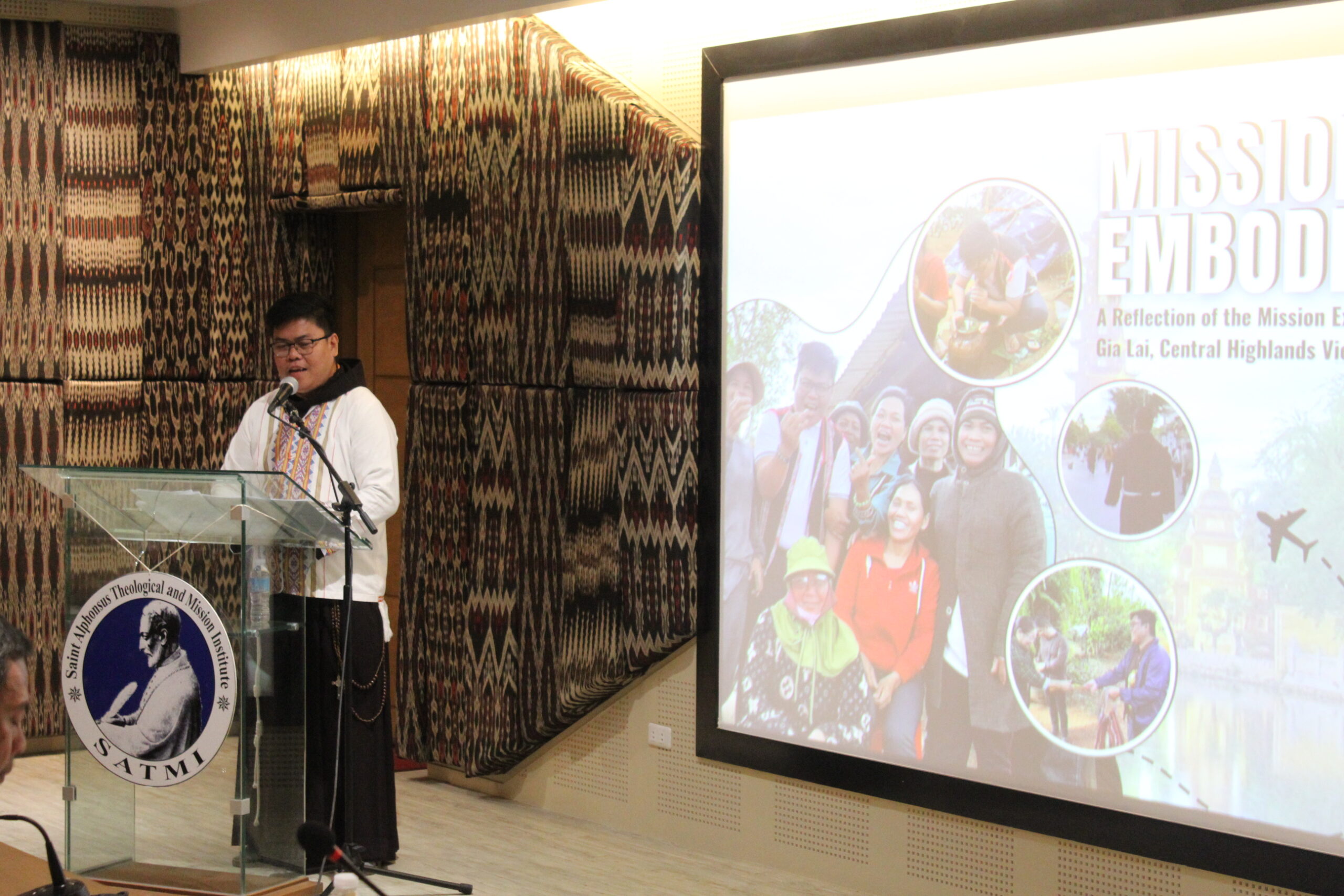
“I write this reflection from the soil of Vietnam’s Central Highlands, where I lived among the people of Làng Bơ and Xê Đăng as a Franciscan missionary. My experience of mission did not begin with teaching or catechism, but with gestures—simple yet profound: an invitation to dance, a ritual shared around fire and wine, and the quiet gift of a handwoven cloth. In these gestures, I encountered God’s grace made tangible. I began to understand that mission is not about bringing God to others, but about recognizing the God already present among them—the Word made flesh who continues to dwell in our midst (John 1:14). There, I discovered that belonging precedes belief. Mission is not conquest but communion; not strategy but shared life. To live mission as embodied presence is to let our hearts be evangelized by those we meet—to see, touch, and dwell where God has already pitched His tent.
I did not light the fire; I found it already burning. And in its warmth, I understood anew what it means to be sent: to be present, humble, and alive to the God who still chooses to dwell among us. From the rhythm of their dance, I remembered what St. Francis knew so well—that mission is not control but presence, not superiority but fraternity. The dance around the fire became, for me, a living image of the Trinitarian perichoresis, the divine dance in which humanity is invited to share. There, amid the rhythm of gongs and the silence between gestures, I learned that the body, the earth, and every encounter are sacred texts through which God still speaks—quietly, tenderly, and always in the language of love.” -𝑬𝒙𝒄𝒆𝒓𝒑𝒕 𝒇𝒓𝒐𝒎 𝒕𝒉𝒆 𝒑𝒂𝒑𝒆𝒓 𝒐𝒇 𝑩𝒓. 𝑱𝒂𝒚𝒇𝒆
– – – – –
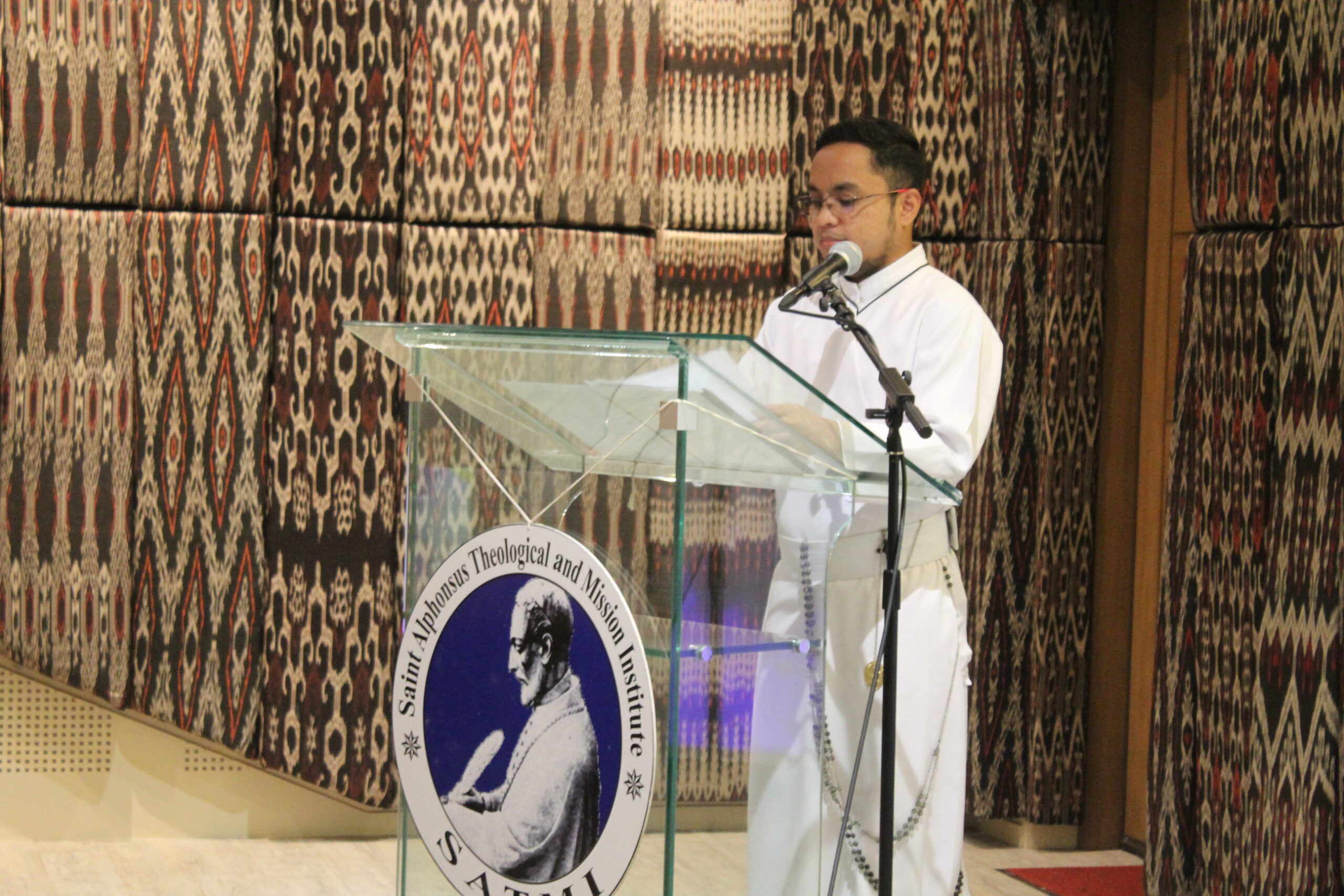
𝐌𝐢𝐬𝐬𝐢𝐨𝐥𝐨𝐠𝐢𝐜𝐚𝐥 𝐏𝐚𝐩𝐞𝐫 𝐏𝐫𝐞𝐬𝐞𝐧𝐭𝐚𝐭𝐢𝐨𝐧 𝐨𝐟 𝐁𝐫. 𝐃𝐚𝐫𝐲𝐥 𝐒. 𝐓𝐞𝐜𝐬𝐨𝐧, 𝐂.𝐒𝐬.𝐑, 𝐞𝐧𝐭𝐢𝐭𝐥𝐞𝐝: “𝐓𝐞𝐚 𝐨𝐟 𝐇𝐨𝐩𝐞: 𝐉𝐨𝐲 𝐢𝐧 𝐒𝐮𝐟𝐟𝐞𝐫𝐢𝐧𝐠”
Mentor:
Mr. Neil John G. Capidos, S.Th.L.
Panels:
Ms. Ma. Isabel S. Actub, Ph.D.
Mr. Lunar T. Fayloga, Ph.D.
𝐓𝐡𝐞𝐨𝐥𝐨𝐠𝐲 𝐨𝐟 𝐇𝐨𝐩𝐞: 𝐅𝐢𝐧𝐝𝐢𝐧𝐠 𝐉𝐨𝐲 𝐢𝐧 𝐒𝐮𝐟𝐟𝐞𝐫𝐢𝐧𝐠
“The real presence of the people in my mission immersion has been the best part of my time there. They are teaching me to understand life’s reality and my chosen vocation. They showed me that hope is genuine in their struggles, and joy is possible even in suffering. How they live their lives is a true testament to God’s providence and presence daily. They are still capable of surviving for a day and providing sustenance for me, even when they possess nothing. After a fight with their neighbor, they remain friends. How other families or parents treat others as their children is a testament to Jesus’ love for all of us.
To summarize, these experiences are like a “tea of hope.” Every leaf picked by the tea pickers in my area carries both struggle and dream. The bitterness of the raw leaves shows the pain of oppression and discrimination, education, rights, dignity, hard work, and daily sacrifices. But when the tea is plucked out, dried, and eventually submerged in hot water, like submerging our faith and trust in God, the tea releases a fragrance, a relaxing taste, and sweetness that gives warmth, strength, and consolation.
Like tea leaves that submerge and endure the hot water to release their true smell, our lives too are full of struggles that show how deep our faith is. Each leaf, marked by hardship and dreams, is like the human heart, which faces challenges but never gives up hope. St. Paul, in his second letter to the Corinthians 4:8-9, says that even though we are “afflicted in every way, but not crushed; perplexed, but not driven to despair; persecuted, but not forsaken; struck down, but not destroyed,” our suffering also is not pointless and meaningless. It makes us better, just like how the hot water changes the bitterness of tea into sweetness.
Similarly, the pain of oppression, the hard work of labor, and the yearning for dignity serve as the foundational sources from which grace and resilience spring. When we fill our lives with faith and trust in God, the “tea of hope” inside us releases its scent of love, peace, and perseverance. Our bodies may get weaker, but our spirits get stronger every day, becoming a warm gift of hope to others.
My experience during the mission immersion resembles this tea of hope. Though marked by difficulties and challenges, it is transformed by Jesus’ love into something life-giving, sustaining, and full of hope. It speaks of God’s love for these people and the hope that arises even in the experience of oppression. These tea pickers, or plantation workers’ dignity and dreams, are signs of God’s liberating presence.
This echoes Gustavo Gutiérrez’s theology: the lived reality of the poor is not optional but the very starting point of theology. Meaning theology must begin with the lived experience of the poor, their struggles, and their hope. They are not merely a secondary consideration, but as the fundamental foundation of theological reflection. He asserts that “theology is a critical analysis of Christian praxis in relation to the Word of God.” From this viewpoint, the most abandoned poor are not merely beneficiaries of charity but engaged participants in divine revelation.
The Tamil tea pickers’ suffering reveals the face of Jesus, and their hope reveals God’s heavenly promise. Every leaf being picked carries pain and hope, but the “Tea of Hope” flows within it. This image represents how the tea estate workers’ daily struggles are not only marked by suffering but also infused with a liberating hope. This hope calls the Church to solidarity, justice, and a mission that empowers them as subjects of their future.
My mission immersion in Maliboda Estate, Sri Lanka, illustrated the profound authenticity of St. Paul’s assertion: “As sorrowful, yet always rejoicing; as poor, yet making many rich; as having nothing, and yet possessing everything” (2 Corinthians 6:10). This paradox was clear in the lives of the Tamil tea pickers, who face daily problems of poverty, exploitation, and discrimination but also show a remarkable spirit of faith, joy, and generosity. Their lives show that real joy and happiness don’t come from not having pain; it comes from having faith and love, even when things seem difficult and tough.” -𝑬𝒙𝒄𝒆𝒓𝒑𝒕 𝒇𝒓𝒐𝒎 𝒕𝒉𝒆 𝒑𝒂𝒑𝒆𝒓 𝒐𝒇 𝑩𝒓. 𝑫𝒂𝒓𝒚𝒍
– – – – –
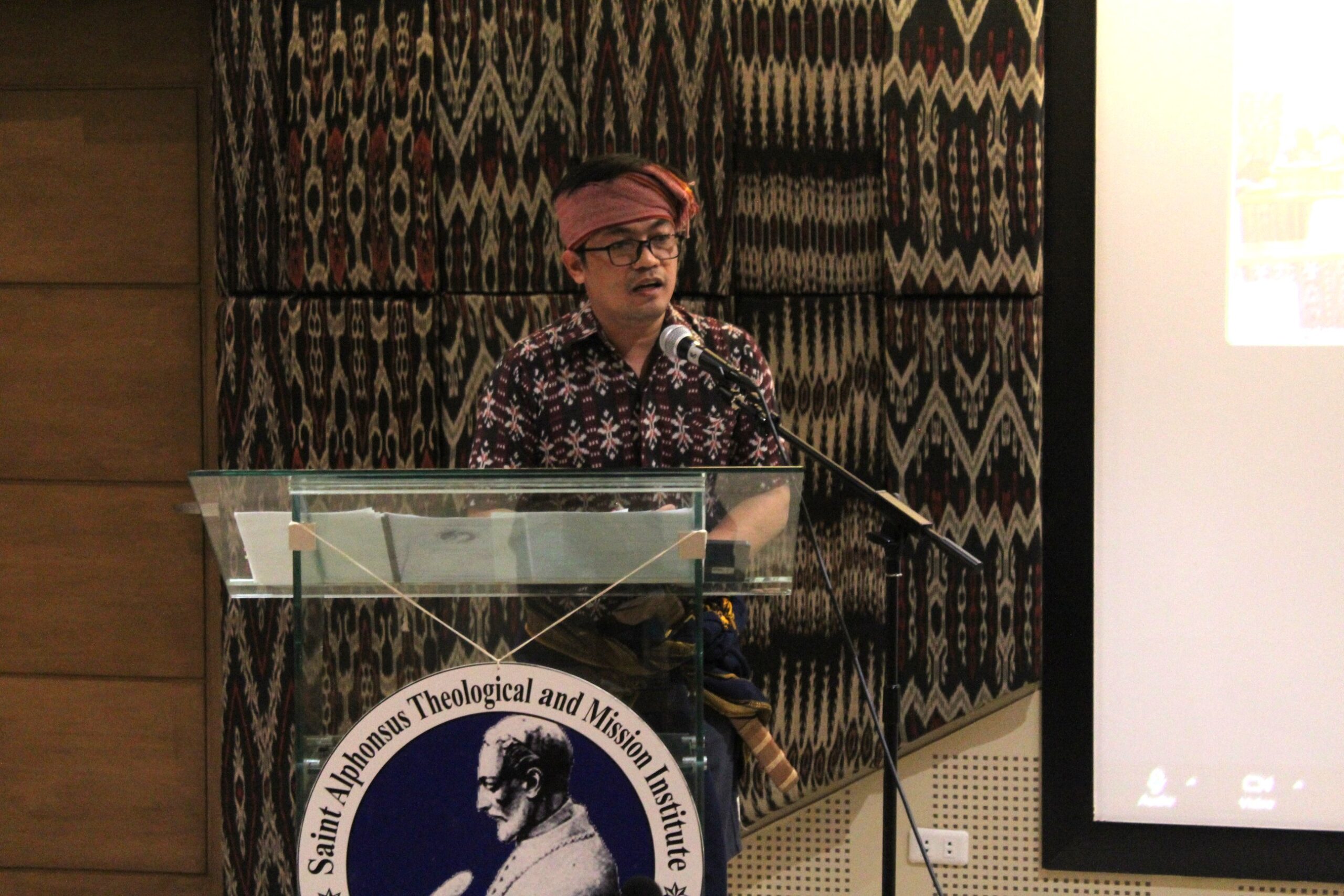
𝐌𝐢𝐬𝐬𝐢𝐨𝐥𝐨𝐠𝐢𝐜𝐚𝐥 𝐏𝐚𝐩𝐞𝐫 𝐏𝐫𝐞𝐬𝐞𝐧𝐭𝐚𝐭𝐢𝐨𝐧 𝐨𝐟 𝐁𝐫. 𝐉𝐞𝐧𝐞𝐥 𝐌. 𝐓𝐢𝐬𝐦𝐨, 𝐂.𝐒𝐬.𝐑 𝐞𝐧𝐭𝐢𝐭𝐥𝐞𝐝: “𝐔𝐌𝐀, 𝐇𝐨𝐮𝐬𝐞 𝐨𝐟 𝐭𝐡𝐞 𝐔𝐦𝐛𝐚𝐧𝐞𝐬𝐞 𝐏𝐞𝐨𝐩𝐥𝐞: 𝐀 𝐌𝐢𝐬𝐬𝐢𝐨𝐥𝐨𝐠𝐢𝐜𝐚𝐥 𝐑𝐞𝐟𝐥𝐞𝐜𝐭𝐢𝐨𝐧”
Panels:
Fr. Edilberto B. Cepe, C.Ss.R, SSL
Mr. Neil John G. Capidos, S.Th.L.
Ms. Crescencia C. Gabijan, Ph.D.
“On December 23, 2024, I began a five-month mission immersion in Sumba, Indonesia—a place that profoundly transformed my understanding of culture, faith, and mission. My arrival on the island filled me with both excitement and curiosity as I set foot in a land rich in tradition, beauty, and mystery. The barren yet enchanting landscape revealed a people deeply rooted in their customs, where faith and culture are intertwined in everyday life.
I was assigned to the Parish of Sta. Maria Assumpta in Kodi, Homba Karipit, under the Diocese of Waitabula. Living among the Sumbanese people, I witnessed their simplicity, generosity, and resilience in the face of poverty and hardship. Most families relied on farming and livestock, struggling against water scarcity, poor road access, and limited educational opportunities. Yet, in their poverty, they radiated joy and faith. Their hospitality moved me—every visit was met with coffee, tea, serih pinang, and the traditional Sumba kiss, a sign of welcome and belonging.
During my mission, I taught English at SMA Katolik St. Maria, where students’ perseverance in pursuing education despite economic challenges inspired me deeply. Many of them dreamed not only for themselves but for the betterment of their families and communities. These experiences opened my eyes to the profound link between social realities and faith—the struggle for daily survival itself became a form of prayer and offering.
Amid my teaching and pastoral activities, I was drawn to the Uma, the traditional Sumbanese house, and particularly to its Dapur, or kitchen, which lies at the very heart of the home. The Uma is more than an architectural structure; it is a sacred space where family, culture, and spirituality converge. Every corner of the house symbolizes the presence of ancestors, while the Dapur is the center of nourishment and communion. It is here that meals are cooked, stories are shared, and family bonds are renewed.
I began to see in the Dapur a powerful image of the Eucharist—the source and summit of Christian life. Just as the Dapur sustains the family with food and warmth, the Eucharist nourishes the People of God with the Body and Blood of Christ. The Uma with Dapur thus became, for me, a living missiological and ecclesiological metaphor. It revealed how the Church can take root in culture, becoming truly incarnate in the lives of the people. In the same way that the family gathers around the hearth, the faithful gather around the altar to be fed and united in love.
This realization shaped my understanding of mission as dialogue and communion. Mission is not about imposing foreign structures but entering into the “Uma” of people’s lives—listening, learning, and discovering how God is already present in their culture. The Sumbanese people’s faith, whether Catholic or Marapu, radiates a deep awareness of the sacred in ordinary life. Their practices of hospitality, respect for ancestors, and community solidarity embody Gospel values in cultural form.
There were also moments of struggle—language barriers, cultural differences, and physical isolation tested my patience and perseverance. Yet these challenges became opportunities for grace. Learning Bahasa Indonesia allowed me to build deeper relationships and appreciate the rhythm of island life. In Sumba, I learned to slow down, to waste time with people, and to see God in small encounters—in a child’s laughter, in a villager’s story, or in a shared meal beside the Dapur.
Through this mission, I came to understand the Church as truly the household of God (Eph 2:19-22), where all belong and are sustained by the Eucharist, the spiritual fire that gives life to the community. The Uma, with Dapur mirrors, reflects this household of faith—a place of belonging, unity, and mission.
My time in Sumba reaffirmed my vocation as a Redemptorist missionary. Like the Dapur’s fire that never goes out, the mission must continually be rekindled by love, humility, and communion. I carry with me the image of the Uma as a living Church—built not only of bamboo and straw, but of hearts united in faith and service. The mission taught me that to evangelize is to build homes of communion where Christ is at the center—where the fire of the Eucharist keeps the Church alive, and where every culture becomes a dwelling place of God among His people.” -𝑬𝒙𝒄𝒆𝒓𝒑𝒕 𝒇𝒓𝒐𝒎 𝒕𝒉𝒆 𝒑𝒂𝒑𝒆𝒓 𝒐𝒇 𝑩𝒓. 𝑱𝒆𝒏𝒆𝒍
– – – – –
Mentor:
Fr. Neil J. Badillo, OFM, S.Th.D
Panels:
Sr. Miriam R. Alejandrino, OSB, S.Th.D.
Mr. Roawie L. Quimba, Ph.D.
Mr. Lunar T. Fayloga, Ph.D.
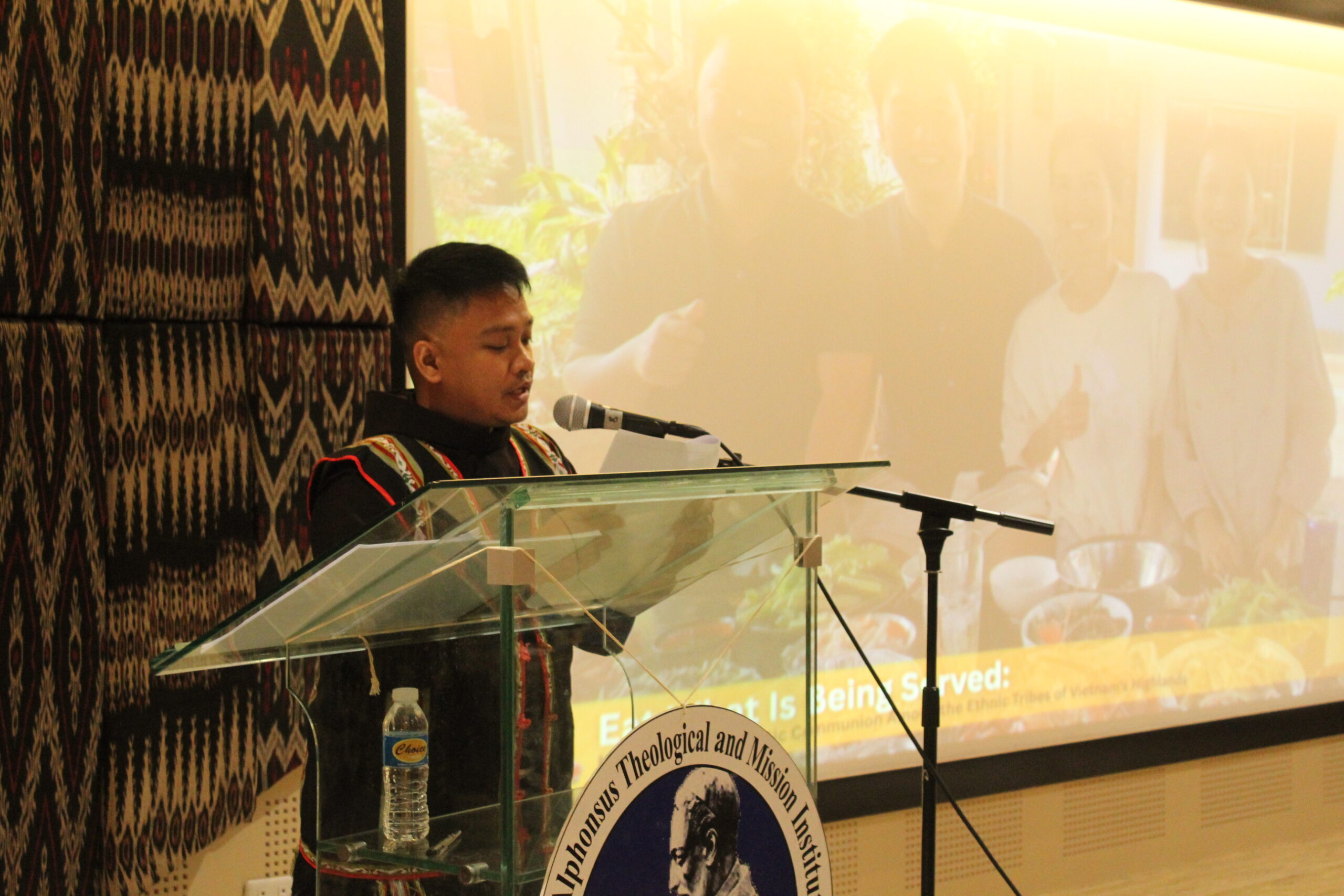
“In this paper, I share my five-month personal experience as a Franciscan missionary living in the diverse country of Vietnam, particularly in the provinces of Gia Lai and Kontum, among some of the ethnic minority groups in the highlands. The title of my paper, Eat What Is Being Served: Mission as Eucharistic Communion among the Ethnic Tribes of Vietnam’s Highlands, indeed reflects what I have genuinely learned from living with the Jarai, Sedang, and Bahnar people on a weekly basis. Their way of living helped me deeply understand the meaning of mission and the Eucharist in a deeper, more human way.
This study invites us to see the Sacrament of Eucharist not only as something we receive during Mass but also as something we are meant to live, day by day. It is in the simple thing like sharing a meal, welcoming a stranger, choosing peace over conflict—that the heart of the Eucharist takes shape in real life. Love, unity, and self-giving don’t always happen on the altar; sometimes, they happen around a kitchen table or under the shade of a tree.
I still remember the day I arrived in the highlands of Vietnam on October 5, 2024, with mixed emotions. I was a bit hesitant because of the fact, that it was my first time being in a mission outside my country. I was excited at the same time because of the new experiences and meeting new people. I didn’t speak much Vietnamese, and people didn’t say much in English. But what I was amazed of they greeted me with food. No such formal way of introducing yourself, just the delightful food like rice and vegetables offered with a smile.
That was when it struck me — mission isn’t just about preaching. It is about being there, sharing life, and sitting down at the table with others. That’s where real communion begins. Each time I was served food, it felt simple yet full of generosity. Over time, it became something sacred — like a little liturgy where life, culture, and God’s hospitality came together. Though I did not dwell with any one community for long, each weekly return became a Eucharistic echo where communion was not only spiritual but also deeply human.
All throughout my experience, I learned that a mission is not always about teaching or introducing something new. Often, the most important part is simply to sit with people, listen to them, accept their hospitality, and share life together. For this reason, I believe that the mission can be Eucharistic, because it is about communion.
This research has shown that the missiological theme “Eat What Is Being Served” embodies the heart of mission as Eucharistic communion. What began as a practical experience of sharing food in the highlands of Vietnam became, upon reflection, a theological vision of mission as participation in the Eucharist. To sit at another’s table, to accept what is offered, and to share in the common meal is to enter a sacred space where God reveals himself in humility and love.
Theological reflections provided a deeper framework for this discovery. Enoch Wan’s diaspora missiology emphasized that mission is about intercultural encounter and mutuality rather than one-sided giving. Stephen Bevans’ contextual theology reminded us that the Gospel always takes root in particular cultures and must be expressed in ways that are meaningful to them. David Bosch’s vision of mission as transformative participation in God’s reign showed that true mission brings about reconciliation, healing, and new life. Each of these insights echoes what my missionary experience revealed—that the Eucharist is not only celebrated in the liturgy but also lived in the concrete acts of receiving, sharing, and being transformed at the table of daily life.
The Scriptures ground this theme in the life of Jesus himself. In Luke 10:7, Jesus instructs the disciples to “eat what is set before you,” teaching them to enter mission as guests who receive before they give. In Luke 24:30–31, the disciples on the road to Emmaus recognize the Risen Christ in the breaking of bread, showing that mission flows from an encounter with Christ in the shared meal. Both texts affirm that mission is inseparable from communion and that the table is the privileged space where Christ reveals himself.
The Church’s teaching strengthens this perspective. Lumen Gentium affirms that the Eucharist is the “source and summit” of the Church’s life and mission. This means that every missionary act must begin from and return to the Eucharistic table. For me as a Franciscan, St. Francis’ devotion to the humility of God in the Eucharist offers a further lens: mission is authentic when it is marked by humility, simplicity, and fraternal love.
Taken together, these insights show that mission is Eucharistic when it is lived as communion across cultures, when missionaries learn to receive as well as to give, and when daily meals and encounters are recognized as extensions of the Eucharist.” -𝑬𝒙𝒄𝒆𝒓𝒑𝒕 𝒇𝒓𝒐𝒎 𝒕𝒉𝒆 𝒑𝒂𝒑𝒆𝒓 𝒐𝒇 𝑩𝒓. 𝑱𝒐𝒔𝒆𝒑𝒉
For more photos: