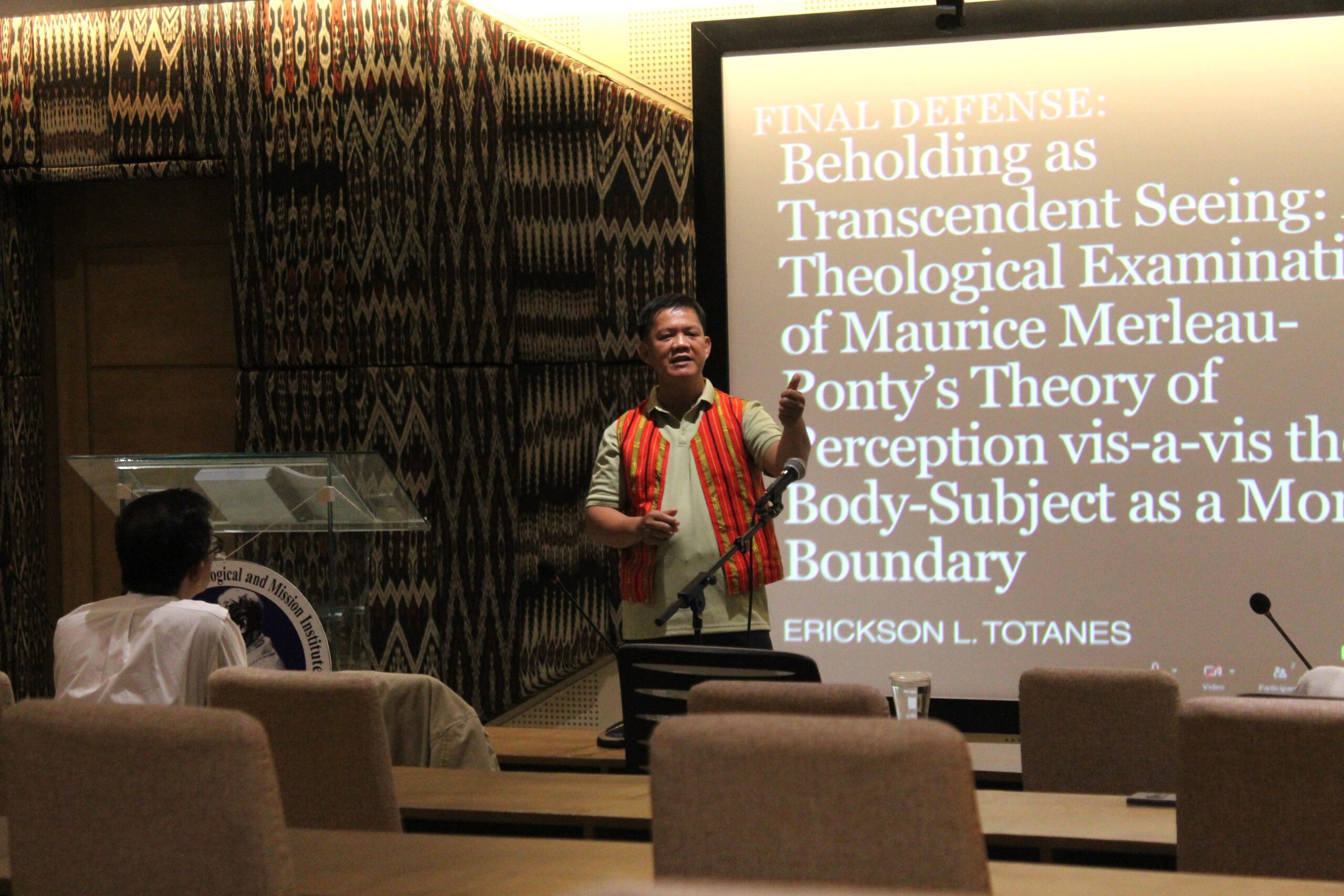
Mentor:
Sr. Miriam R. Alejandrino, OSB, S.Th.D.
Panels:
Fr. Neil J. Badillo, OFM, S.Th.D
Fr. Eugene S. Elivera, S.Th.D
Fr. Henry A. Escasinas, DCD, SSL
“This paper is an examination of Merleau-Ponty’s theory of perception vis-à-vis the body-subject as a moral boundary. In the analysis, the concept of perception is transposed into that of beholding, understood as a transcendent seeing in its literal and metaphorical senses. Why beholding as transcendent seeing? The analysis of Merleau-Ponty’s concept of perception reveals that when transposed into the mode of beholding, it carries within itself, for itself, and beyond itself a way of seeing, being, and relating in which the subject, others, things, and the world are involved in a dynamic exchange and reversible relationship. Using a theosophical method of analysis, this paper examines the question of perception, the body-subject, the notion of moral boundary, and the implication of those three levels of interpretation when placed in the context of some attempt to reflect on non-colonial elements in culture that have a bearing on the pastoral challenge of the Church.
In the first level, the analysis showed that beholding is a way of seeing. It demonstrated how a simple act of seeing can reveal a more complex relationship that goes beyond the dialectic between the pursuer and the pursued, subject, and object. Using the phenomenological approach, the study underscores that seeing is seeing something, always seeing with, and is implicatory of a reversible role of the body that sees that can also be the body that is seen. Transposed into other human capacity, what is received becomes the receiver, what is beheld becomes the beholder. This reversal, which was also described by Merleau-Ponty as an intertwining, serves as the foundation with which humanity’s self-understanding rests. This is the mystery of the incarnation, which to Merleau-Ponty, changes everything. This leads to the second level.
The study reveals that beholding is a way of being through one’s body that takes the side of the subject as a point of view in the world. To see is to be. When understood adequately from the lens of the incarnation is an embodied good from the very beginning. In the postmodern context, a reductionist treatment of the body is spelled out, and that must be challenged: issues on identity, power, and technology. The issue of identity includes the constructed body, commodified body, and compartmentalized body; on the issue of power is the idea of social capital, liberated body, and the body as biopolitics; and the level of technology is the close attention on transhumanism, artificial intelligence, and digitalization of self. The examination provides that the problems lie not in their expression but in absolutizing a part to be a whole, thus forming an ideological motif in looking at the body. Arguably, the body as a mode of defense in the name of ownership is disowned in the name of power and consumerism. By interjecting the narrative of Paul in his first letter to the Corinthians, it reorients the body to its point of reference. In the analysis of 1 Corinthians 6:12-20, where the body is taken as a whole in the metaphorical sense, Paul asserts the body’s orientation toward unity, its rootedness in the Holy Spirit as a source, its transcendent point of reference, as well as its relational consequences to the self and the community. These themes are further developed in 1 Corinthians 12:12-31 when the body reveals the reversibility of one and the many, the inseparability of parts with the whole, and the body of Christ as a unity, and the primacy given to the vulnerable members of the same body of Christ. As the examination moves to Merleau-Ponty’s position, the study affirms a reductive-open-totality where the body assumes a sensible sentient role in the common world. In and through the world, the body makes a disclosure of the incarnation of the concrete cogito, its inherence in the common world, the natural and cultural features of the body, the indwelling and transcendence of the flesh, and the body’s existential position as a subject within intercommunion. As a body communing with the world, the body manifests itself in various levels: its deployment in spatiality, its being as a sexed being, as an expression and speech, and the moment of beholding its all-temporal dimension. At the heart of these crisscrossing points is the mystery of the incarnation enshrined as the synthesis of humanity and the moments of convergence of opposites and the basis of affirming communion, individuality, wholeness, and woundedness as integral to the lived experience of the body.
In the third level, beholding becomes a way of relating as it carries seeing and being in the moral plain. Here, the body as a subject becomes a boundary and in an overlapping boundary with other bodies. Hence, the notion of an inter-subject-being in the world. Along this line is the language of the body in relationality, which includes synergizing differences, synchronicity of movements, and synodality as a movement of the whole, which is then the basis for the justification of dialogue, participation, co-responsibility, and love at the heart of relationality. In and through these modes are two other primacies along with the primacy of perception: of the body and relationship, which confirms the body’s openness to communion and the paradox of its transcendence in nothingness.
Moving to the fourth level, the paper amplifies the prospects of Merleau-Ponty’s insights as a method elucidated through situational awareness, reflective engagement, embodied intentionality, and the embrace of possibilities in carrying out the task of doing non-colonial thought. In this study, the focus centered on the Indigenous peoples’ way of life as expressed in the different practices-made-symbol, like clothing, rituals, dances, and music, along with their ordinary activities that evoke a transcendent seeing. Of all Western philosophers, Maurice Merleau-Ponty’s ideas are among those that reach out to the sensibility of the Eastern way of looking, being, and relating. In the Philippine context, where varied cultures are in existence, receptivity to his ideas can be a tool, if not a propeller, to the ongoing task of doing a reflection involving people’s way of living, particular and specified in such a way that the mystery of the incarnation can indeed be an ongoing event, albeit a venue to the unfolding of its redeeming power and offer of love. Beholding this mystery is not a waste of time for humankind, but the transcendence of all human pursuits raised to the level of its origin, to Him who looks at creation, especially humanity, and behold, it was very good.” -𝑬𝒙𝒄𝒆𝒓𝒑𝒕 𝒇𝒓𝒐𝒎 𝒕𝒉𝒆 𝒑𝒂𝒑𝒆𝒓 𝒐𝒇 𝑴𝒓. 𝑬𝒓𝒊𝒄𝒌𝒔𝒐𝒏
– – – – –
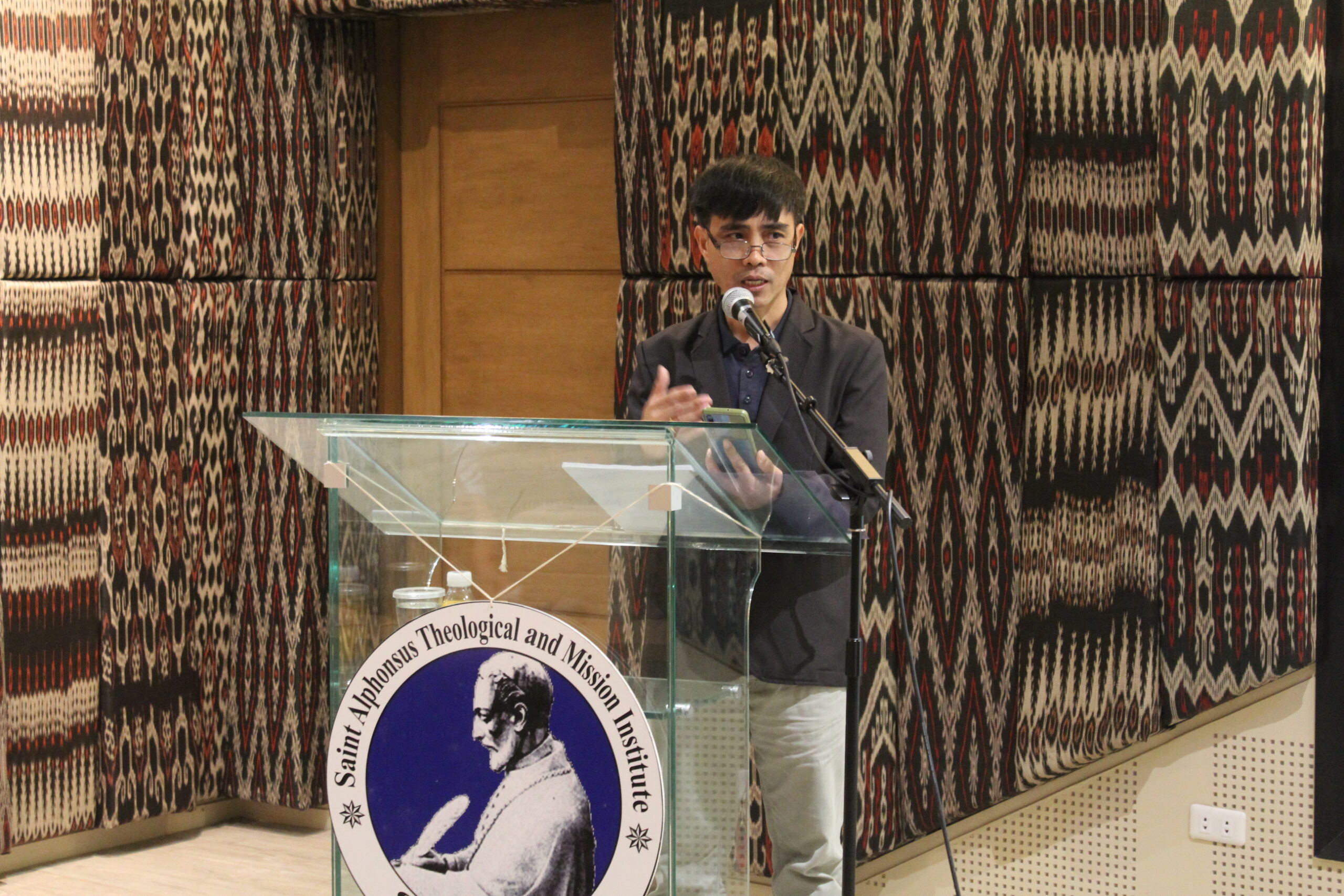
Mentor:
Mr. Roawie L. Quimba, Ph.D.
Panels:
Fr. Neil J. Badillo, OFM, S.Th.D
Sr. Miriam R. Alejandrino, OSB, S.Th.D.
Fr. Eugene S. Elivera, S.Th.D
“The issue of marital breakdown is a complex reality of married life, and it directly affects whether families stay strong and stable. In response, the Church offers a comprehensive ministry of accompaniment, utilizing various spiritual and faith-based support activities such as pastoral care and counseling, marriage encounter, and retreats and recollections. A significant number of studies show that these programs, indeed, benefit the Filipino married couples in troubled marriages. However, while these programs provide essential relational and spiritual support, the moral and theological challenges that accompany a marital crisis may be overlooked.
There is a need to acknowledge the challenges that Filipino married couples in troubled marriages face as they strive to integrate Church teachings on marriage into their everyday lives. And so, as it is morally right that they follow the Magisterium, it is also morally imperative for the Church to accompany them. Hence, the ministry of accompaniment requires a more robust moral-theological pastoral framework. This framework is designed to address the moral and theological dimensions of a marital crisis, which utilizes a contextually relatable medium for Filipino married couples, such as OPM hugot love songs.
Filipinos love music. It is fascinating to realize that they are fond of listening to songs that feature themes of lament and laughter. This explains why it is not surprising in the Philippines for hugot love songs to become hits or most requested on FM stations, or be listed in top music playlists of popular streaming sites (like iTunes or Spotify), or as soundtracks in movies, or even as theme songs for TV dramas (teleseryes). And so, taking this into account, it is worth exploring the role of OPM hugot love songs and how the themes of lament and laughter embedded in them, taken as revelatory of a divine engagement with human suffering and celebration, can provide Filipino married couples in troubled marriages with opportunities for moral reflection and moral discernment that foster the cultivation of virtues that can serve as pathways to marital healing.” -𝑬𝒙𝒄𝒆𝒓𝒑𝒕 𝒇𝒓𝒐𝒎 𝒕𝒉𝒆 𝒑𝒂𝒑𝒆𝒓 𝒐𝒇 𝑴𝒓. 𝑹𝒐𝒅𝒊𝒐
– – – – –
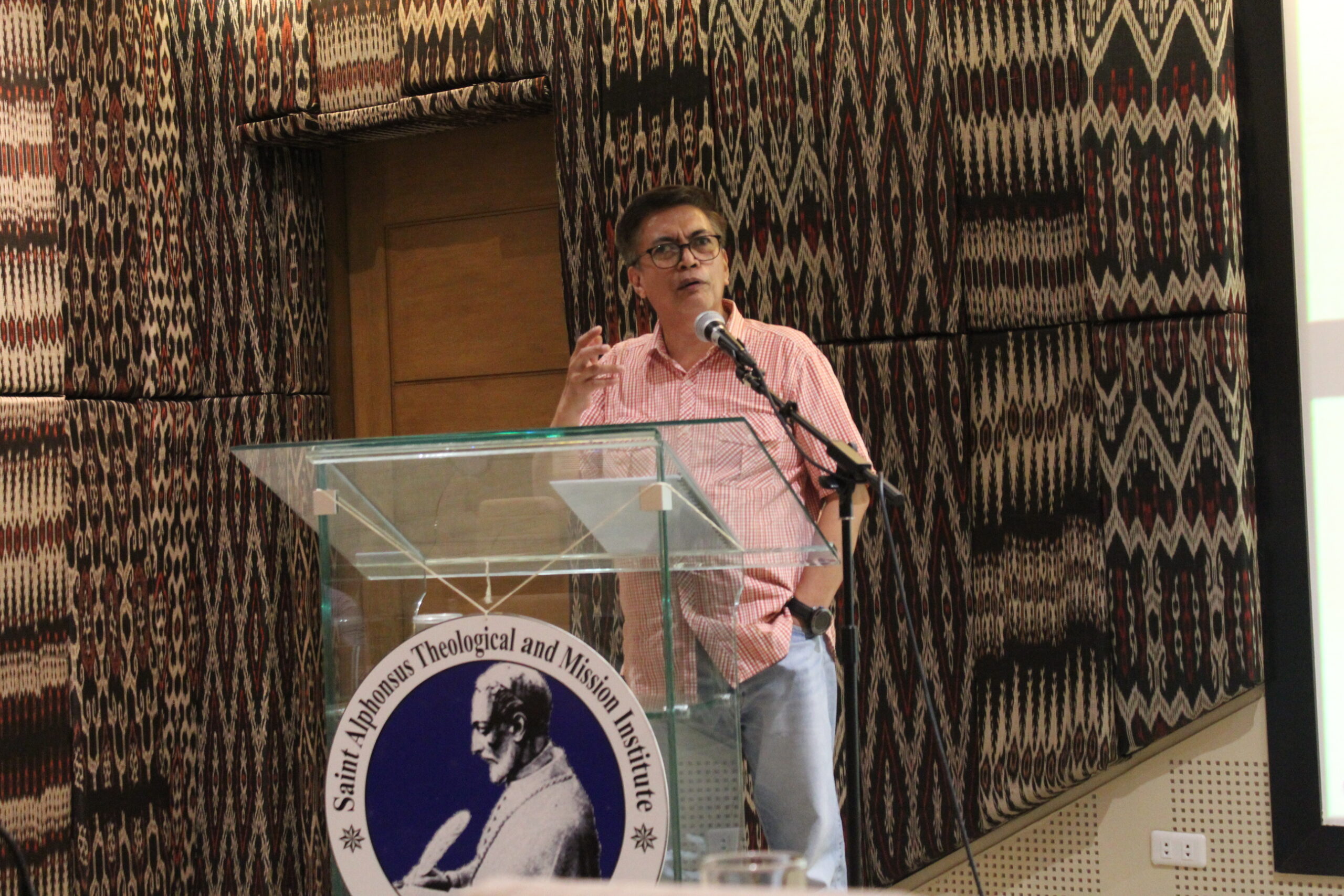
𝐃𝐢𝐬𝐬𝐞𝐫𝐭𝐚𝐭𝐢𝐨𝐧 𝐏𝐫𝐨𝐩𝐨𝐬𝐚𝐥 𝐃𝐞𝐟𝐞𝐧𝐬𝐞 𝐨𝐟 𝐌𝐫. 𝐉𝐨𝐬𝐞 𝐅𝐞𝐫𝐦𝐢𝐧 𝐂𝐫𝐚𝐯𝐞 𝐞𝐧𝐭𝐢𝐭𝐥𝐞𝐝 “𝐏𝐚𝐠𝐛𝐮𝐧𝐮̂𝐭: 𝐓𝐨𝐰𝐚𝐫𝐝 𝐚 𝐋𝐢𝐛𝐞𝐫𝐚𝐭𝐢𝐯𝐞-𝐏𝐫𝐨𝐩𝐡𝐞𝐭𝐢𝐜 𝐂𝐨𝐧𝐭𝐞𝐱𝐭𝐮𝐚𝐥 𝐅𝐫𝐚𝐦𝐞𝐰𝐨𝐫𝐤 𝐨𝐟 𝐃𝐨𝐢𝐧𝐠 𝐌𝐨𝐫𝐚𝐥 𝐓𝐡𝐞𝐨𝐥𝐨𝐠𝐲”
Panels:
Sr. Miriam R. Alejandrino, OSB, S.Th.D.
Ms. Crescencia C. Gabijan, Ph.D.
Mr. Lunar T. Fayloga, Ph.D.
“Grounded in the liberative and prophetic tradition of the Christian faith, this study proposes pagbunût as a contextual framework in doing Moral Theology integrating Biblical, doctrinal, and pastoral insights toward moral discernment, clarity and decision making. As a liberative-prophetic contextual framework, the eight steps of pagbunût will guide an individual or community in doing moral-theological discourse in the light of faith toward moral discernment, clarity, and decision-making in a liberative and prophetic way.” -𝑬𝒙𝒄𝒆𝒓𝒑𝒕 𝒇𝒓𝒐𝒎 𝒕𝒉𝒆 𝒑𝒂𝒑𝒆𝒓 𝒐𝒇 𝑴𝒓. 𝑭𝒆𝒓𝒎𝒊𝒏
– – – – –
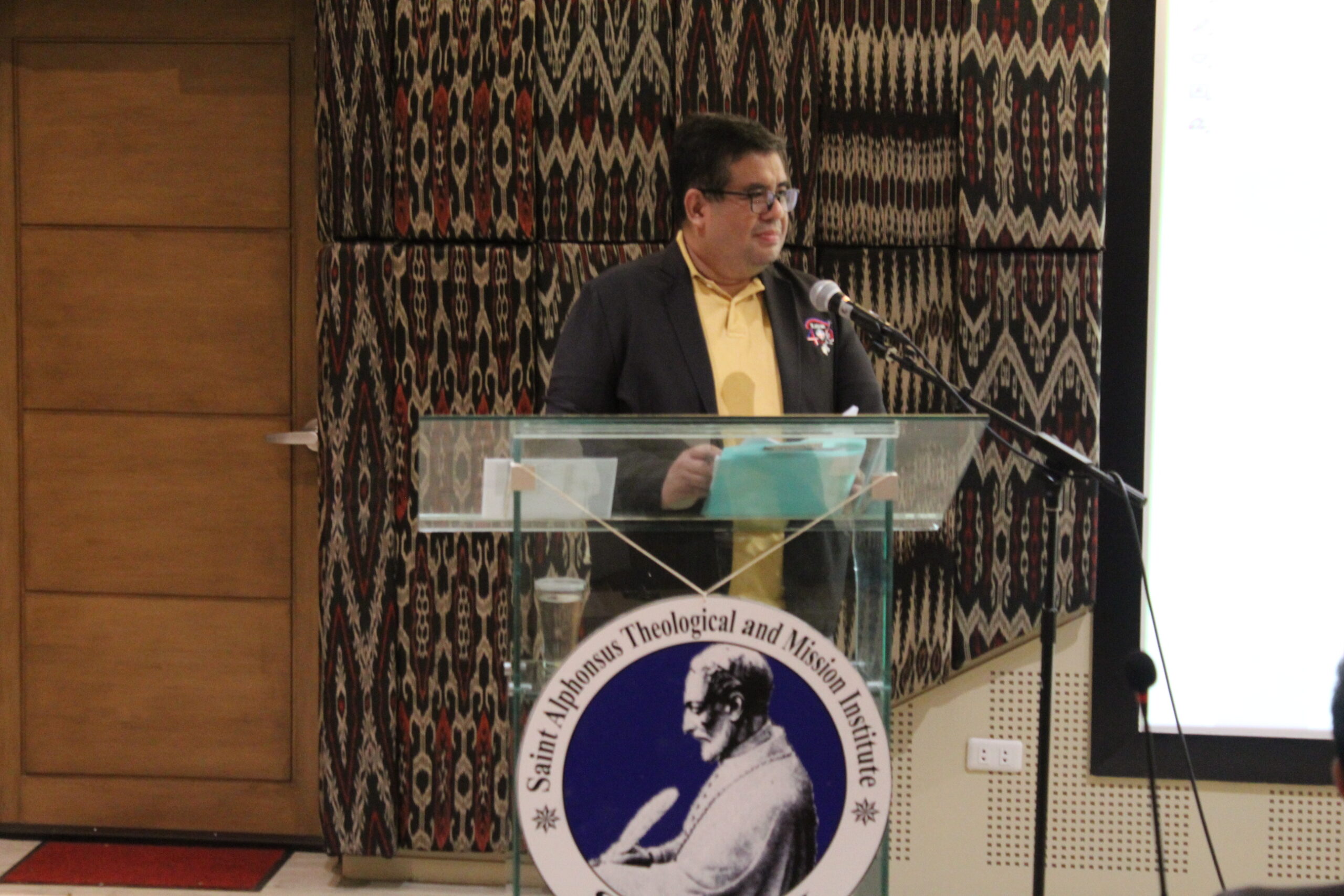
Mentor:
Fr. Neil J. Badillo, OFM, S.Th.D
Panels:
Sr. Miriam R. Alejandrino, OSB, S.Th.D.
Ms. Crescencia C. Gabijan, Ph.D.
Mr. Roawie L. Quimba, Ph.D.
“The Dogmatic Constitution on the Church 31 (LG) deepens this understanding by articulating the vocation and mission of the laity. Primarily, the laity’s vocation is to seek the Kingdom of God through their engagement in the temporal affairs according to God’s plan and according to their circumstances, professions, and occupations. Secondly, they are called to work for the sanctification of the world through the testimony of theological virtues, including Christian virtues and values. In doing these, they become witnesses to holiness in ordinary life, described by Pope Francis as “saints next door,” or middle-class saints, the saints just around the corner. “We are all called to be holy by living our lives with love and by bearing witness in everything we do, wherever we find ourselves.” In this way, the Holy Eucharist forms the ordinary faithful into a continual offering to the Father for His glorification.
To lay down the moral foundation of this dissertation, the researcher uses James Keenan’s concept of virtues articulated in his book Virtues for Ordinary Christians. Keenan reframes morality focusing on sin, instead, the study of human living. Morality is about learning how to live morally as human beings rather than focusing on the transgression of laws or the commission of evil acts. He emphasizes that moral life takes shape through regular or ordinary moral actions that form habits, cultivate disposition to do good and gradually develop into virtues. These virtues are concrete, practical, useful, and necessary, instead of looking at them as towering virtues and available only for mystics and saints.
This would be practical for linking worship, especially the Holy Eucharist, to everyday moral life of the faithful. If the Eucharist is the place of encounter with the risen Christ, as the Emmaus story illustrates, and if it is both the source and summit of Christian life, as Lumen Gentium teaches, then this encounter must bear fruit in the ordinary contexts where believers live and act. The virtues described by Keenan become the concrete ways in which Christians embody the Eucharistic dismissal, Ite, Missa est. They move the faithful beyond simply “avoiding what is wrong” to actively “doing what is right,” forming a Eucharistic ethic that takes shape in family life, workplaces, and communities.
St. John Paul II reinforces this in Dies Domini, when he reminds the faithful that “the Eucharistic celebration does not stop at the church door…Christians who gather each Sunday to experience and proclaim the presence of the Risen Lord are called to evangelize and bear witness in their daily lives.” Evangelization, in this context, is not limited to preaching. It is lived out through witnessing, through the ordinary virtues. It is a call to Christ’s disciples to commit themselves to shaping the other moments of Sunday outside the liturgical context, like family life, social relationships, and the moments of relaxation, so that the peace and joy of the Risen Lord will emerge in the ordinary events of life. By shaping the rhythms of everyday life, family relationships, social interactions, rest, and recreation with the peace and joy of the Risen Lord, Christians extend the liturgy into life itself. Bearing witness is also a way of evangelization.
Thus, ordinary virtues integrate with the Eucharistic foundations of this study. From the biblical foundation of Emmaus to the doctrinal teaching of the Eucharist as source and summit, the moral life of the believer is shown to be not merely an individual pursuit of virtuous life but a communal witness to Christ. Ordinary virtues, lived out in the everyday life, become the embodiment of the Eucharistic dismissal, transforming disciples into living testimonies of the Gospel in the world. Making these virtues part of the Filipino Catholics’ way of life, the Holy Eucharist would not just be lex orandi, lex credendi. It is also lex vivendi.” -𝑬𝒙𝒄𝒆𝒓𝒑𝒕 𝒇𝒓𝒐𝒎 𝒕𝒉𝒆 𝒑𝒂𝒑𝒆𝒓 𝒐𝒇 𝑴𝒓. 𝑷𝒆𝒓𝒘𝒊𝒏
For more photos: