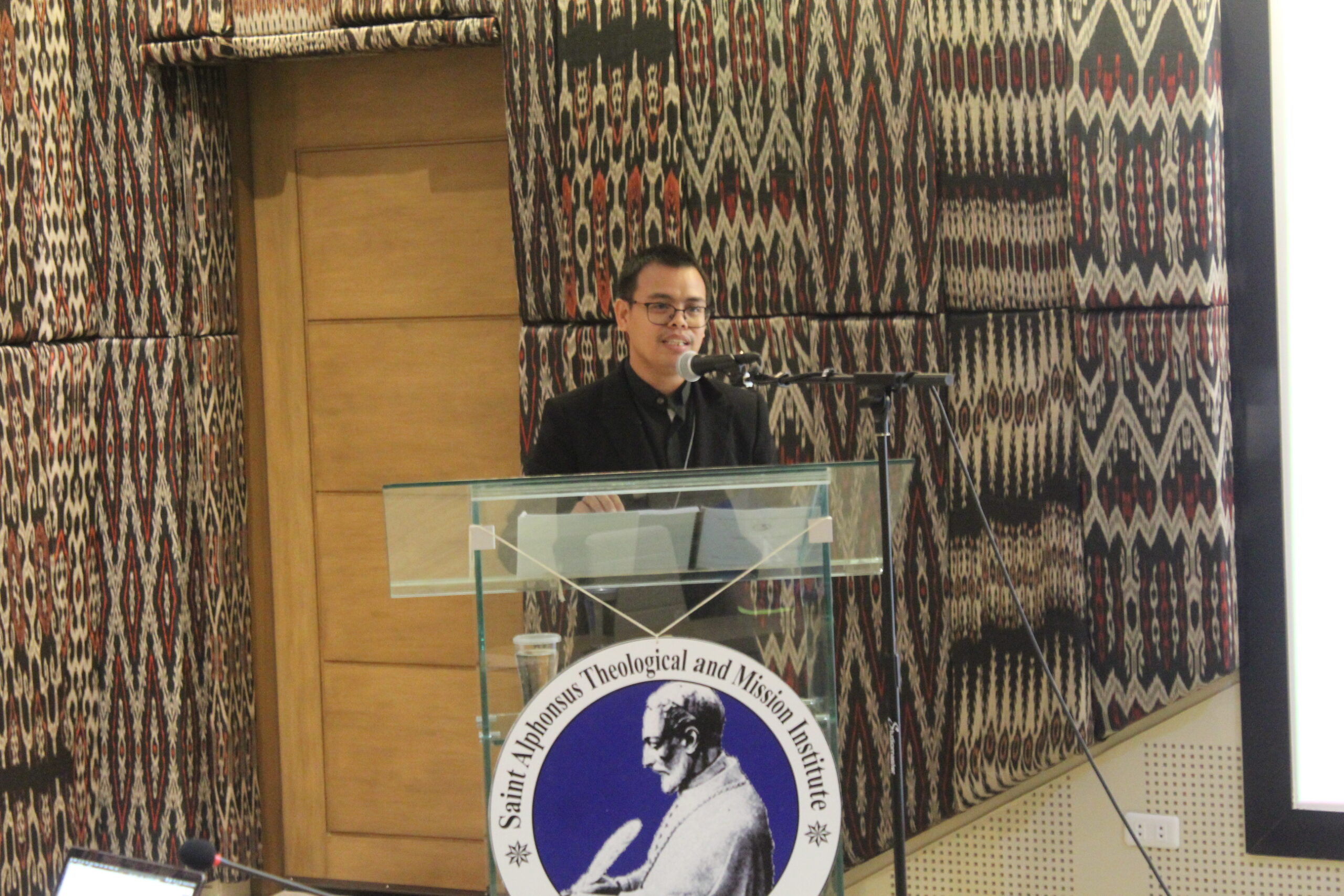
Synthesis Paper Presentation
–
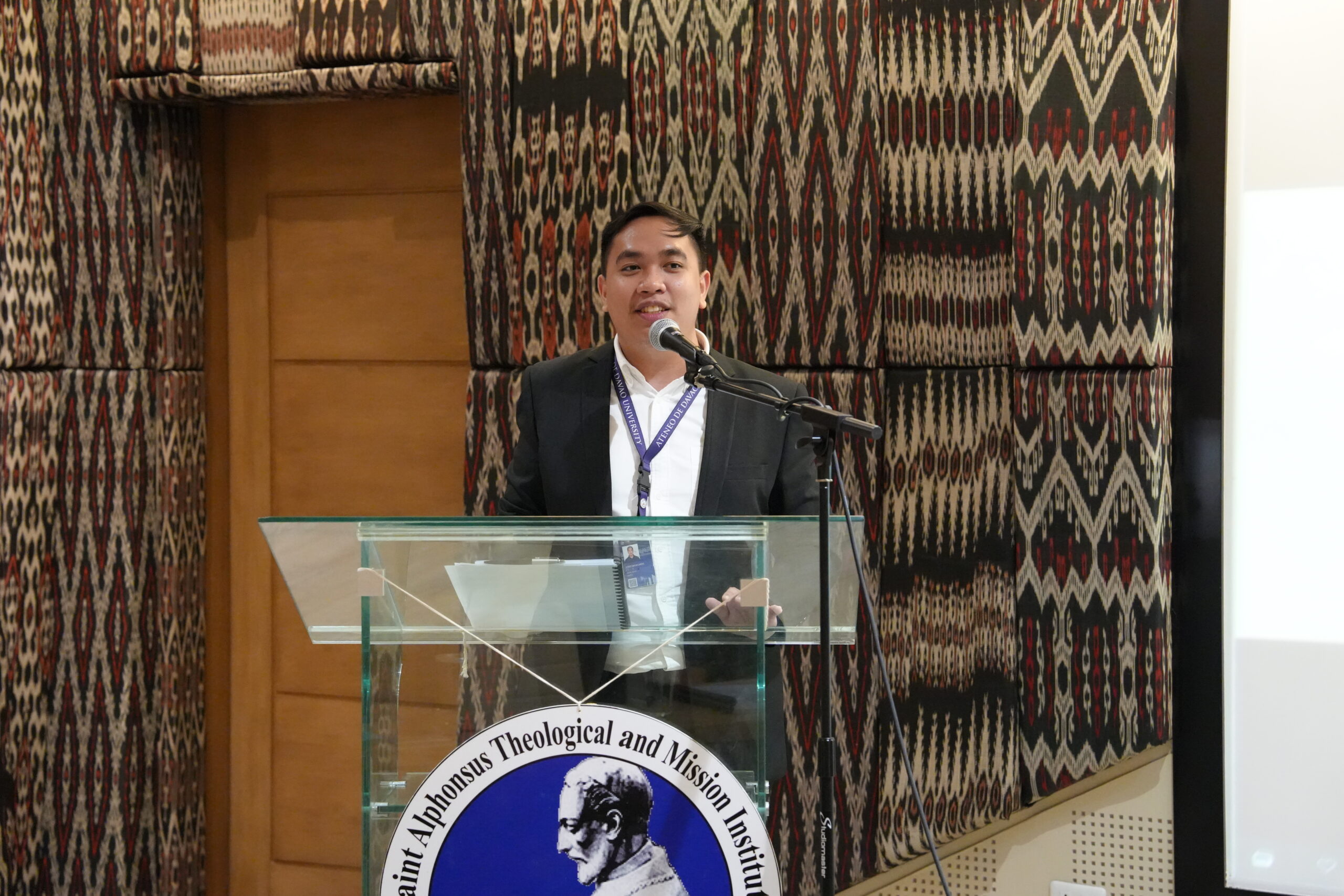
Mentor: Mr. Lunar T. Fayloga, Ph.D
Panels: Fr. Edilberto B. Cepe, C.Ss.R., SSL,
Mr. Niel John G. Capidos, STL,
Mr. Danilo Agustin Jr., STL
“This study has explored the complex intersection of Church teachings, pastoral care, and the lived experiences of seminarians with same-sex attractions. It reveals the inherent tensions and very real challenges that exist, tensions that demand careful discernment and a willingness to engage with the human stories behind the doctrines. But it also illuminates the potential for immense growth, for a more compassionate Church, and for a richer understanding of vocation.
The central call of this study is for the Church to be unwavering in its fidelity to what it understands to be God’s plan, and at the same time, to offer the boundless love and mercy of Christ to all, especially those who experience themselves as being on the margins. As the Catechism reminds us, persons with same-sex attractions must be accepted with respect, compassion, and sensitivity. Every sign of unjust discrimination in their regard should be avoided.’ This is not simply a matter of tolerance, but of recognizing the inherent dignity and belovedness of every person.
And so, I return to the profound and challenging question posed by Pope Francis: ‘Who am I to judge?’ Let this not be a rhetorical question, but a living invitation. An invitation to move beyond judgment and condemnation, towards a deeper empathy, active listening, and a transformative recognition of the image of God in every human heart. Let us remember the words of Fr. Eduardo Apungan, CMF, when he said, ‘The issue of recognizing a person and the personality is not about gender. Christ told us to love creation. In the context of love, respect, and recognition, Christ excluded no one.’
It is my hope that this study contributes, even in a small way, to a Church that more fully embodies that inclusivity, respect, and love”. -𝐸𝑥𝑐𝑒𝑟𝑝𝑡 𝑓𝑟𝑜𝑚 𝑡ℎ𝑒 𝑝𝑎𝑝𝑒𝑟 𝑜𝑓 𝐵𝑟. 𝑀𝑎𝑟𝑐𝑜
– – – – –
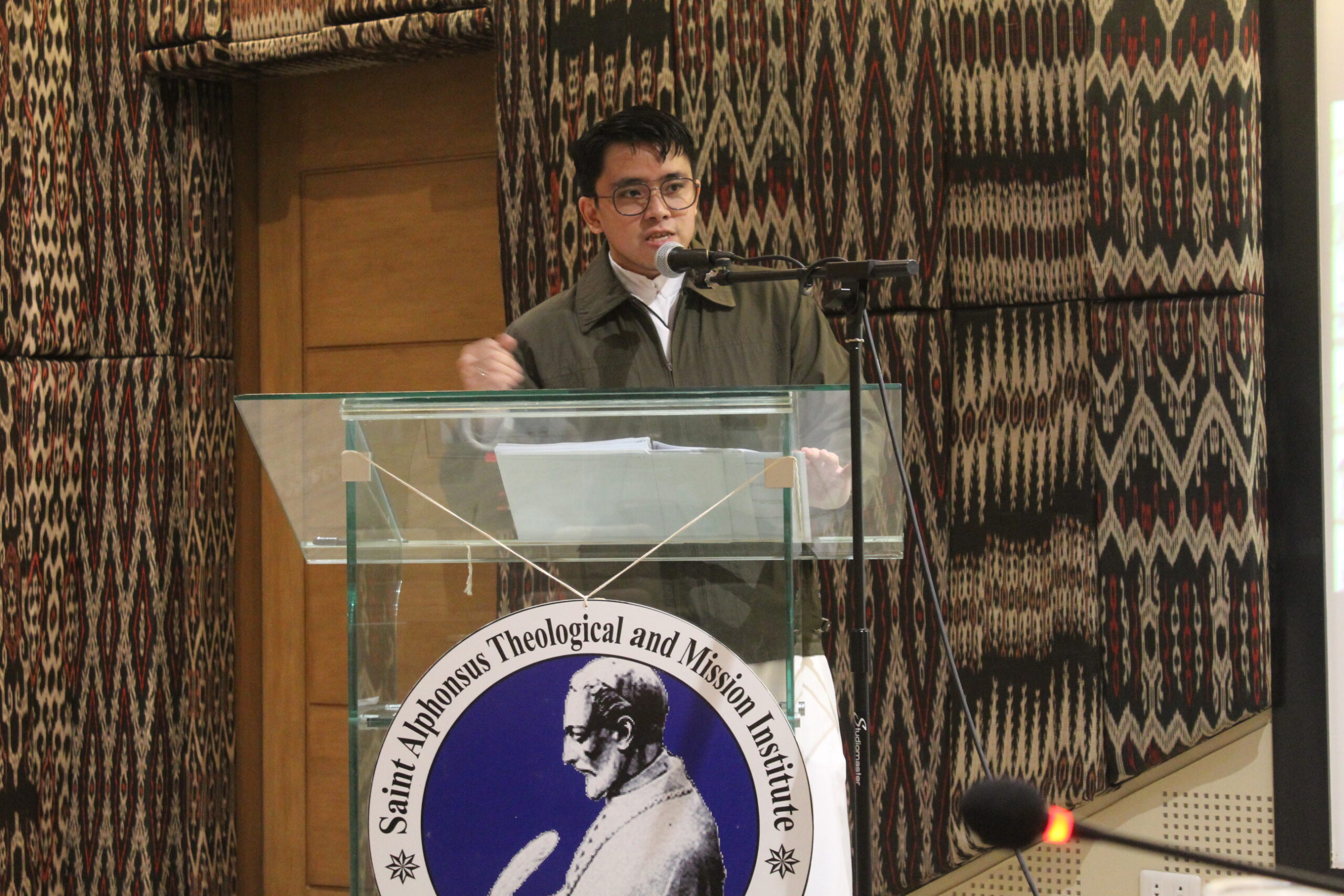
Mentor: Mr. Danilo Agustin Jr., STL
Panels: Fr. Edilberto B. Cepe, C.Ss.R., SSL,
Fr. Niel J. Badillo, OFM, S.Th.D,
Ms. Maria Isabel S. Actub, Ph.D
“The Church continually affirms that baptism initiates a person’s communion with Christ and participation in his threefold office—“priestly, prophetic, and kingly”—known in Latin as Tria Munera or Triplex Munus.1 During baptism, the individual is sacramentally configured to Christ immediately upon reception of the sacrament.2 This theological conviction is reflected in the catechetical instruction given to parents and godparents, who learn that the newly baptized individual becomes part of the ‘now’ of Christ upon the pouring of the water, signifying spiritual rebirth. Drawing parallel with Christ’s own baptism at the river Jordan, wherein he was publicly revealed as the “beloved Son” (Matthew 3:17), Catholic theology holds that the baptized similarly receive their filial identity and are commissioned to share in Christ’s mission. In the Catholic faith, baptism not only marks the entrance into a life of grace but also into the Holy Trinity’s vibrant life, the Missio Dei, which forms the foundation of the Church’s mission.3 Though this mystery of faith may appear figurative, it carries concrete and communal significance. It calls all the baptized to embrace a communal, participatory, and missionary role, living consciously and intentionally as priestly, prophetic, and kingly people in all aspects of life.
According to the 2024 Pontifical Yearbook published by Vatican Press, statistics show that the sum of christened Catholics globally rose from “1.376 billion in 2021 to 1.390 billion in 2022” even amid increasing globalization and secularism besetting the Church. This raises a crucial pastoral question: To what extent do baptized believers partake in the Church’s missionary and apostolic life beyond their involvement in sacramental participation, especially the Eucharist? While secularism, professional preoccupation, and economic pressures are often cited to explain the faithful’s passive involvement in the Church, these factors alone do not fully account for the issue. It is equally necessary to explore the theological and pastoral dimensions that may contribute to this passivity, specifically, the lack of awareness concerning the Tria Munera conferred at baptism. As the study argues, the persistent passivity among the baptized is not solely due to the inattention of the church ministers or the spiritual indifference of the faithful. One can easily jump to the conclusion that laity are seen as inactive in the Church because they are business-oriented, money-driven, profession-centered, and self-reliant individuals – the existential realities of secularism. Rather, it suggests a more nuanced issue: a lack of theological clarity and accessible catechesis regarding the layperson’s role in “sanctifying, teaching, and governing” offices of Christ. The understanding of these roles has historically been concentrated in the ordained ministry, often to the marginalization of the lay faithful’s participation. In many cases, references to the Tria Munera were made only during infant baptism, often without adequate explanation or continued formation.
The Synod on Synodality, we contend, need not craft new theological frameworks, nor alter the foundational teachings of the Church. The call is instead to retrieve and reinterpret existing teachings—especially the Tria Munera—in a manner that is theologically sound yet pastorally effective and contextually relevant. The documents of Vatican II, especially Gaudium et Spes and Lumen Gentium, as well as Pope John Paul II’s Christifidelis Laici, have long recognized the essential role of the laity in the Church’s life and mission. The current synodal process does not present new doctrine but instead reaffirms and adapts these teachings to address the pastoral challenges of today. Thus, the contribution of this study lies in showing that the objective of synodality—to promote an inclusive and participatory Church—can be realized not through doctrinal changes but through a renewed pastoral and theological appropriation of the Triplex Munus. By articulating these baptismal offices into the language accessible to the people, the Church may help uncover the latent potential within her members and foster a deeper commitment to ecclesial communion and mission.
It has been a constant invitation, encouragement, and a call from the Second Vatican Council to actively engage the entire People of God in the apostolic and sacramental life of the Church. Such is the renewal that the pontificate of the late Pope Francis emphasized, that every baptized person’s gift from the Holy Spirit is valued and seen as a vital part in the evangelizing mission of the Church in which he or she belongs.
In chapter 1, we have discussed the immense nature of our baptism, that from being freed from the inherited sins of our first parents from the waters of rebirth, we are also anointed with oil that makes us sharers in Jesus’ one eternal priesthood, prophetic, and kingly ministries in the Church. In that same chapter, we have revisited different models of the Church through the reflections of theologians, the CCC’s catechetical instructions, and other Church documents. We are a holy People of God – the laity, the consecrated, and the ordained – with distinct gifts and roles, responding to the universal call to holiness and one baptismal calling of becoming the leaven of the Lord in our world. In chapter 1, finally, we mentioned that this synodality that the Church is heading towards now does not need to present new doctrines in order to promote full participation from the laity. We have demonstrated that the people of God, even if they want to, cannot fully give themselves if, in the first place, they do not know exactly who they are, what they can do, and where they are expected by their faith to engage. With that, we propose that there is a necessity of revisiting and reinterpreting Tria Munera not in a conventional and legalistic way of seeing the office, but in a synodal perspective that views those offices not as titles and positions, but ministries of service in the Church of which all are called to participate.
In chapter 2, we have highlighted the lived reality of the priestly, prophetic, and kingly roles within the Basic Ecclesial Communities (BECs) of Our Mother of Perpetual Help Redemptorist Parish. The chapter emphasizes that these roles are not merely theological concepts but are deeply ingrained in the faith life and mission of the community. Through interviews and surveys with diverse participants—including leaders, elders, women, youth, LGBTQI+ members, and persons with disabilities—this chapter brings their experiences to the forefront, illustrating how these threefold offices manifest in their daily lives. By using a synodal approach that gives value to listening, discernment, and shared insights, the study affirms the sensus fidei fidelium and contributes to theological inquiry and ecclesiological renewal, all while honoring the agency and dignity of the participants.
In chapter 3, we mentioned that the first and best way to understand the Tria Munera is neither by going immediately to the Vatican II documents, compendium of the catechism of the Church, nor by using the reflections of the renowned theologians, but through the sacred scriptures. In that chapter, we followed a coherent outline of how the Tria Munera is reflected in the Bible. First, by pondering how the priesthood, teaching, and shepherding ministries of Jesus are prefigured in the Old Testament. Second, on how Jesus perfected the Levitical and Melchizedek’s priesthood by being the sacrifice himself; how he perfected the prophetic function of Moses as messenger, as the enfleshed human face of God, and the new and eternal covenant. He perfected the mosaic law and the decalogue by imprinting the law of love no longer in tablets, but in the depths of the human heart. Finally, he perfected the Kingship of David by reigning and conquering the world, not with soldiers, horses, chariots, but by being a humble servant like a Good Shepherd who lay down his life for his sheep. The chapter ends with how the early Christian communities, those who follow the way of the resurrected Christ, lived and continued these ministries of service in their time.
In Chapter 4, we have presented the Tria Munera in a beautiful way by narrowing down according to the teachings of Vatican II, PCP II, and other theologians, the structure of Tria Munera in the Church, that first, it is rooted in Christ, then, he instituted it as ministries in the Church with the ordained as ministers and nourishes, strengthens, and engages the people in the sanctifying, teaching, and shepherding ministries of Jesus in the Church. In that chapter, we did not undermine the existing structure in the Church but rather helped us better understand the very nature of these existing structures and how they can be exercised beautifully, collegially, and faithfully. We have also revisited the nature of the priesthood, magisterium, and hierarchy in the Church. First, the common and ministerial priesthood are not binary bodies in the Church but a communio of the People of God that share in their own roles and functions in the Tria Munera of Christ. The Magisterium is the teaching authority of the Church, whose duty is not only to point out errors and to correct erroneous teachings, but also to convict the people to become evangelizers themselves by appreciating and recognizing the sensus fidei. The hierarchy in the Church is not an honorary function or office, but ministries of service in the Church that reflect the values of the Kingdom of love, righteousness, justice, and peace. The hierarchy not only oversees, governs, and administers in the church after the heart of the Chief Shepherd, who serves, rather than being served. Finally, the hierarchy is to foster unity and communion in the Church, for according to Lumen Gentium, the leaders are sacraments of unity in the Church that the People of God scattered throughout the world may be one in heart, mind, and zeal so as to continue the mission of Christ.
We have mentioned in the beginning that people of God can only give their utmost self, actively and fully, to the Church and Christ’s mission once they become consciously aware of their roles and functions. In Chapter 5, with synodality as our conceptual framework, and using the final document it published, we have exhortatively linked the Tria Munera with the two pivotal parts of the Eucharist: the breaking (liturgy) of the Word to the prophetic and teaching ministry, and the breaking of the bread, the Eucharist, to the priestly mission. Lastly, the commissioning and sending part of the Mass occurs right after the final blessing, where the entire assembly gathered around the table of the word and nourished by the bread of Christ, is commissioned for the work of evangelization. Being sent, we are asked by the Church that after being drawn into the Mystery of Christ in the Eucharistic sacrifice of the Mass, we too, who have witnessed the love of God in his Son and have partaken in His Body and hear His Word, may follow the example of His who offered his body and blood for all humanity.
Synodality is a style of life that, according to Pope Francis, is where God is leading the Church through the Holy Spirit in the third millennium to renew its missionary impulse. Synodality is an aggiornamento in the Church where everyone’s vocation, charisma, gifts, and voice are heard and recognized. In the synodal missionary Church, everyone is seen as agents of evangelization and workers of the Kingdom, no longer as passive and silent spectators. Since all are part to the universal call to holiness, every baptized can contribute to the sanctification of the world based on their own capacities and roles, by drawing their families, friends, and neighbors closer to God and by making their own lives, like that of the Lord’s, a fragrant and pleasing offering to God. They can contribute to the conversion of the world by being evangelized and becoming evangelizers themselves in their communities, announcing the good news, and also denouncing things contrary to the values of the Kingdom by being a conscience of society. They can contribute to the governing and serving mission of the Church by partaking in decision-making and discerning processes, co-responsibility, pastoral charity, fostering harmony, fraternal dialogue, upholding justice, peace, integral human development, and care for the common home”. -𝐸𝑥𝑐𝑒𝑟𝑝𝑡 𝑓𝑟𝑜𝑚 𝑡ℎ𝑒 𝑝𝑎𝑝𝑒𝑟 𝑜𝑓 𝐵𝑟. 𝐸𝑚𝑚𝑎𝑛
– – – – –
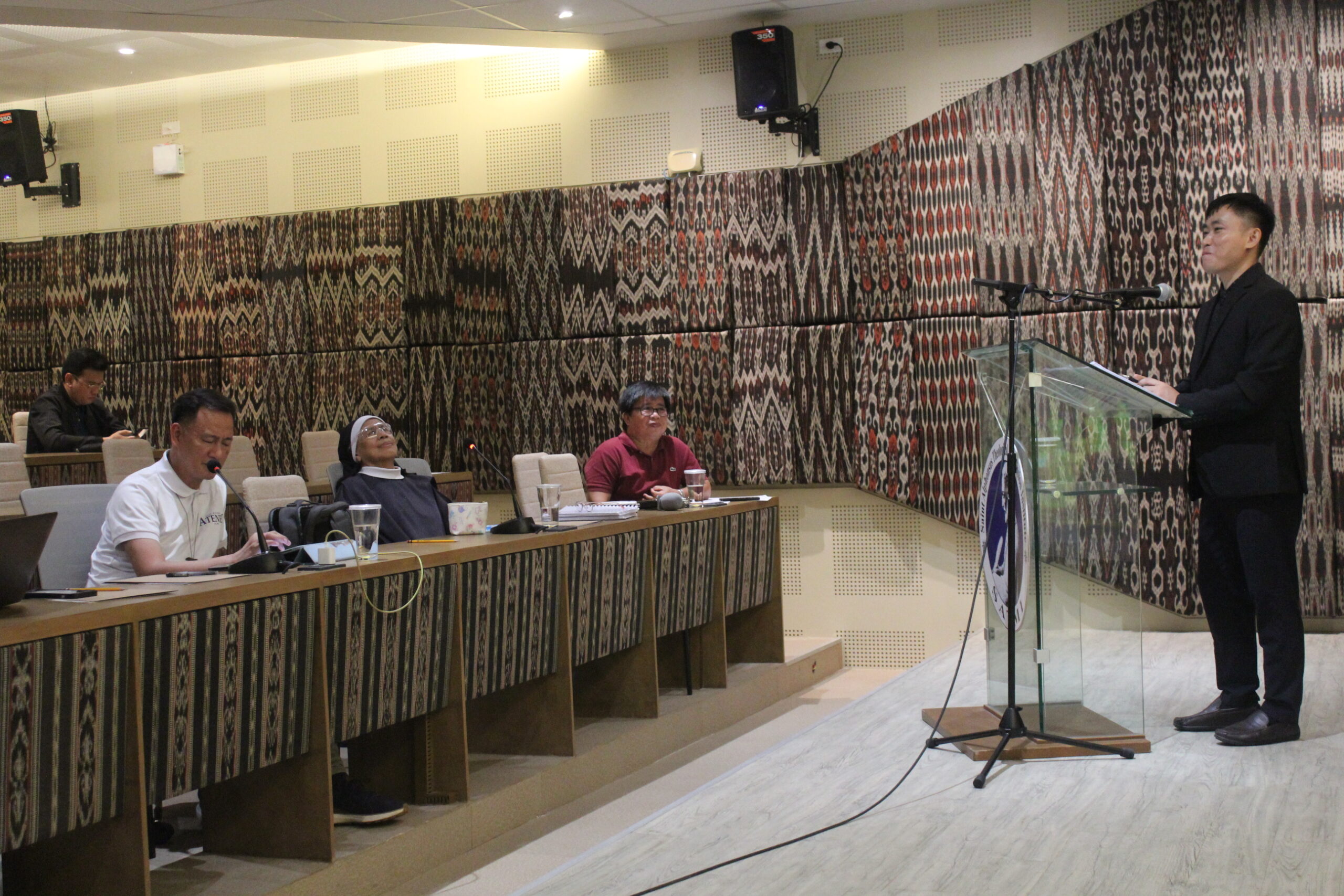
Mentor: Fr. Niel J. Badillo, OFM, S.Th.D
Panels: Sr. Miriam Alejandrino, OSB, S.Th.D
Mr. Lunar T. Fayloga, Ph.D,
Ms. Crescencia C. Gabijan, Ph.D
𝐂𝐨𝐦𝐦𝐨𝐧 𝐓𝐞𝐚𝐜𝐡𝐢𝐧𝐠𝐬 𝐨𝐟 𝐁𝐮𝐝𝐝𝐡𝐚 𝐚𝐧𝐝 𝐉𝐞𝐬𝐮𝐬
“Both Jesus and the Buddha aimed to lead people toward a higher spiritual life, focusing on moral values and personal change. Jesus stated, “Do not think that I have come to abolish the law and the prophets; I have not come to abolish them but to fulfill them” (Matthew 5:17). This highlights His goal of bringing spiritual renewal instead of discarding earlier religious beliefs. In a similar way, the Buddha did not reject Hindu teachings but aimed to improve them, guiding his followers toward freedom from suffering (dukkha) and achieving enlightenment (nirvana). This focus on moral and spiritual growth is a vital point for dialogue between Catholics and Buddhists in Thakhek. Recognizing that both faiths strive to elevate humanity through ethical behavior and self-awareness allows religious leaders and followers to engage in meaningful discussions that emphasize shared values rather than differences in beliefs.
One major theme in both Christianity and Buddhism is the pursuit of justice and the reduction of suffering. In the Gospel of Matthew, Jesus is depicted as a champion of justice: “And he will proclaim judgment among the nations. He will not strive, he will not shout, nor will his voice be heard in the streets… until he leads justice to victory. In him, the nations shall place their hope” (Matthew 12:18-21). This verse illustrates Jesus’ mission to bring justice and hope to everyone, regardless of their background. Similarly, the Buddha taught that all beings suffer because of attachment and ignorance, but that anyone can achieve liberation (nirvana) through wisdom and ethical actions. This idea of universal salvation aligns with the Catholic belief that God’s grace is available to everyone. In Thakhek, where Buddhists and Catholics live together, recognizing this shared moral commitment can be the foundation for initiatives that promote social justice, especially in areas like poverty reduction, education, and community development.
Another important similarity between Jesus and the Buddha is their focus on free will and personal responsibility in spiritual matters. The Buddha never forced his teachings on anyone; he encouraged people to seek truth through their own experiences and reflections. He advised his followers, “Do not believe in anything simply because you have heard it… but after observation and analysis, when you find that anything agrees with reason and is beneficial for all, then accept it and live by it.” This approach is similar to Jesus’ call for people to choose righteousness freely, as shown in his words, “If anyone wishes to come after me, he must deny himself, take up his cross daily, and follow me” (Luke 9:23). Both figures highlighted that spiritual growth needs a personal commitment rather than blind acceptance of rules. This idea is especially relevant in Thakhek, where interfaith dialogue can thrive through open and respectful conversations that allow individuals to explore religious truths while keeping their unique identities.
Both traditions provide deep insights into the concepts of heaven, hell, and the afterlife, which can be understood metaphorically rather than literally. The Buddha described heaven and hell as mental states shaped by one’s actions and mindset instead of fixed places of eternal reward or punishment. Similarly, Christian theology, especially within Catholicism, recognizes that the afterlife involves purification before one can be with God. This idea aligns with Buddhist teachings on karma and samsara, where our actions affect our future experiences. Understanding these perspectives can help bridge gaps and promote respect between Catholic and Buddhist followers in Thakhek.
Furthermore, religious texts in both traditions use two types of language literal and spiritual requiring careful interpretation to prevent misunderstandings. The Bible, for example, includes passages with metaphorical language to convey deeper truths. In Genesis 2:17, God warns Adam that eating the forbidden fruit will lead to death, but this refers to a spiritual separation from God rather than immediate physical death. Similarly, Jesus says in John 3:3, “Unless one is born anew, he cannot see the kingdom of God,” indicating a spiritual rebirth rather than a physical one. Buddhist scriptures also use symbols to express moral and philosophical ideas. The idea of emptiness (śūnyatā) does not mean that nothing exists but rather that everything is interconnected and lacks inherent existence. Understanding the use of figurative language in religious discussions is crucial for promoting interfaith understanding in Thakhek, where literal interpretations can sometimes lead to confusion.
In the context of interfaith collaboration, the shared teachings of Jesus and the Buddha provide a solid basis for dialogue and cooperation. Acknowledging their common calls for justice, compassion, and spiritual growth can inspire joint efforts that benefit the community. For example, Catholic and Buddhist groups in Thakhek can work together on projects that focus on social welfare, environmental care, and ethical education programs reflecting their shared values. Furthermore, religious leaders can lead interfaith discussions that emphasize practical applications of their teachings in daily life, fostering a culture of respect and coexistence.
The common teachings of Jesus and the Buddha encourages a vision of unity in diversity, where differences in beliefs do not obstruct cooperation for peace and justice. Through ongoing conversations and shared projects, Catholicism and Buddhism in Thakhek can work toward agreement and collaboration, showing that while religious traditions may differ, they do not have to conflict. By embracing this spirit of interfaith cooperation, Thakhek can set an example for religious harmony, where Catholic and Buddhist communities unite to create a more compassionate and just society”. -𝐸𝑥𝑐𝑒𝑟𝑝𝑡 𝑓𝑟𝑜𝑚 𝑡ℎ𝑒 𝑝𝑎𝑝𝑒𝑟 𝑜𝑓 𝐵𝑟. 𝑁𝑜𝑢𝑦
– – – – –
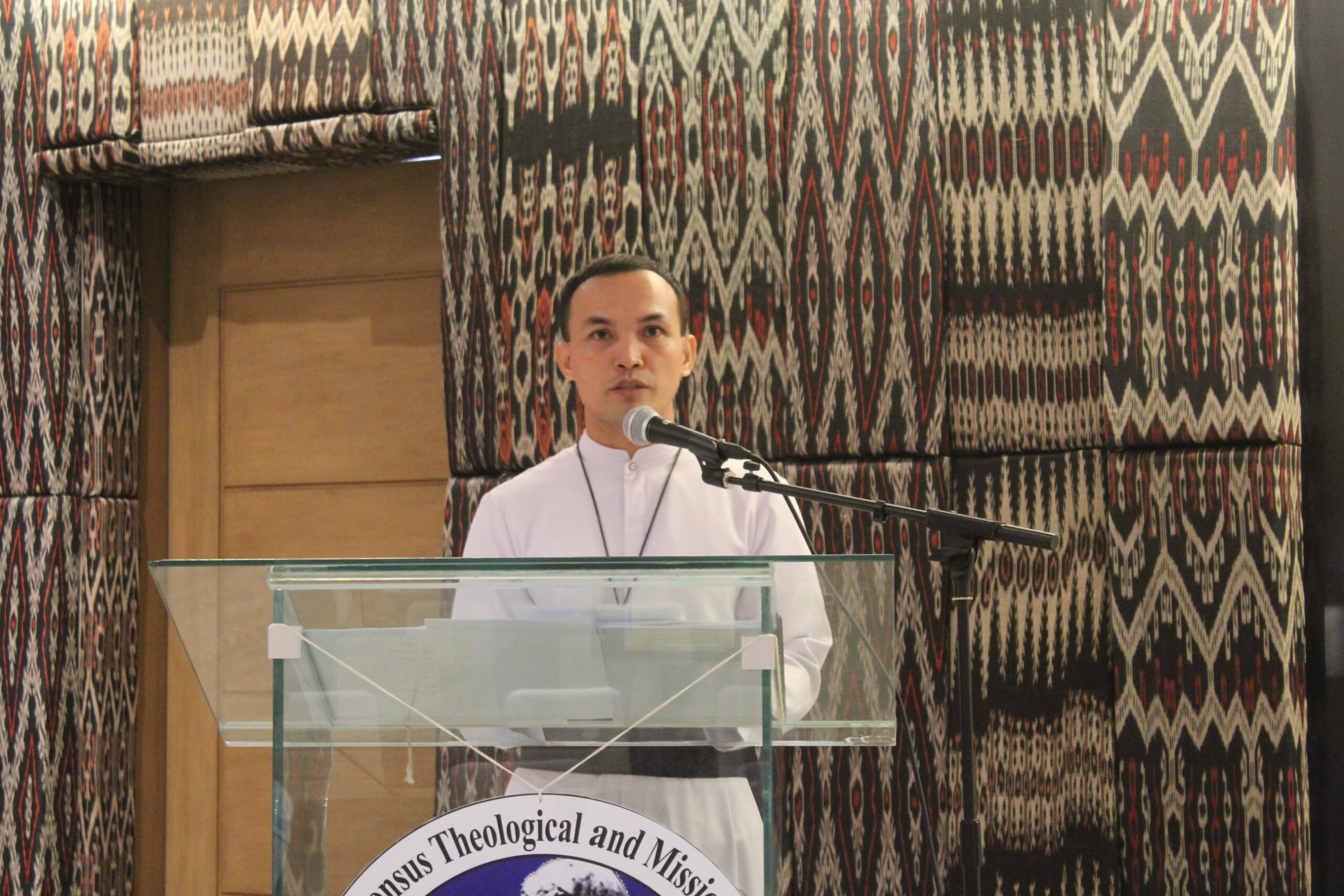
Mentor: Fr. Neil J. Badillo, OFM, S.Th.D
Panels: Fr. Edilberto B. Cepe, CSsR, SSL
Mr. Neil John G. Capidos, STL
Ms. Maria Isabel S. Actub, Ph.D
“In Pope Francis’ Apostolic Exhortation “Gaudete et Exsultate,” we are invited to examine deeply the nature of holiness and how it exists in our daily lives. The exhortation is a deep call and a soft reminder that holiness is not for the select; instead, it is a call that speaks to all of us, no matter our backgrounds or situations. To Filipinos, who are culturally immersed in faith and communion, the call is particularly meaningful.
In the Filipino concept of sanctity, there is frequently a mixture of happiness, humility, and kindness. These values are at the heart of the Filipino spirit and resonate with the words spoken by Pope Francis. He invites us to see that holiness is present in our everyday interactions and in the everyday acts of love and service that we provide to others. It is in our ability to bring joy, to build relationships, and to outstretch our hands in solidarity that we are the very embodiment of holiness.
Moreover, the rich tradition of bayanihan—community cooperation—reflects the essence of what it means to be holy in the Filipino context. It is about supporting one another, finding strength in community, and fostering relationships grounded in love and mutual respect. This sense of togetherness mirrors Pope Francis’ call for us to live out our faith actively, inviting us to be “the salt of the earth and the light of the world” in our communities.
In “Gaudete et Exsultate,” Pope Francis insists on the necessity of discernment and the universal call to holiness in the face of our contemporary realities. For Filipinos, this invitation is a call to look within and without, checking how our lives mirror our faith, our cultural values, and our service to others, particularly the poor and the marginalized.
As we hold on to the message of this exhortation, let us never forget that holiness is all about being real to ourselves and to our relationships. It is being joyful in our service and passing on grace in the midst of life’s struggles. By our singular culture, we come to understand that holiness is not merely something to think but to experience, something to draw us to sing of God’s goodness and follow the faith walk together.
Let us hope that this Apostolic Exhortation will motivate us to grow deeper in holiness as we endeavor to manifest the love of Christ in all we do, rejoicing in the lovely brocade of faith that makes up our Filipino heritage”. -𝐸𝑥𝑐𝑒𝑟𝑝𝑡 𝑓𝑟𝑜𝑚 𝑡ℎ𝑒 𝑝𝑎𝑝𝑒𝑟 𝑜𝑓 𝐵𝑟. 𝐸𝑟𝑖𝑐
– – – – –
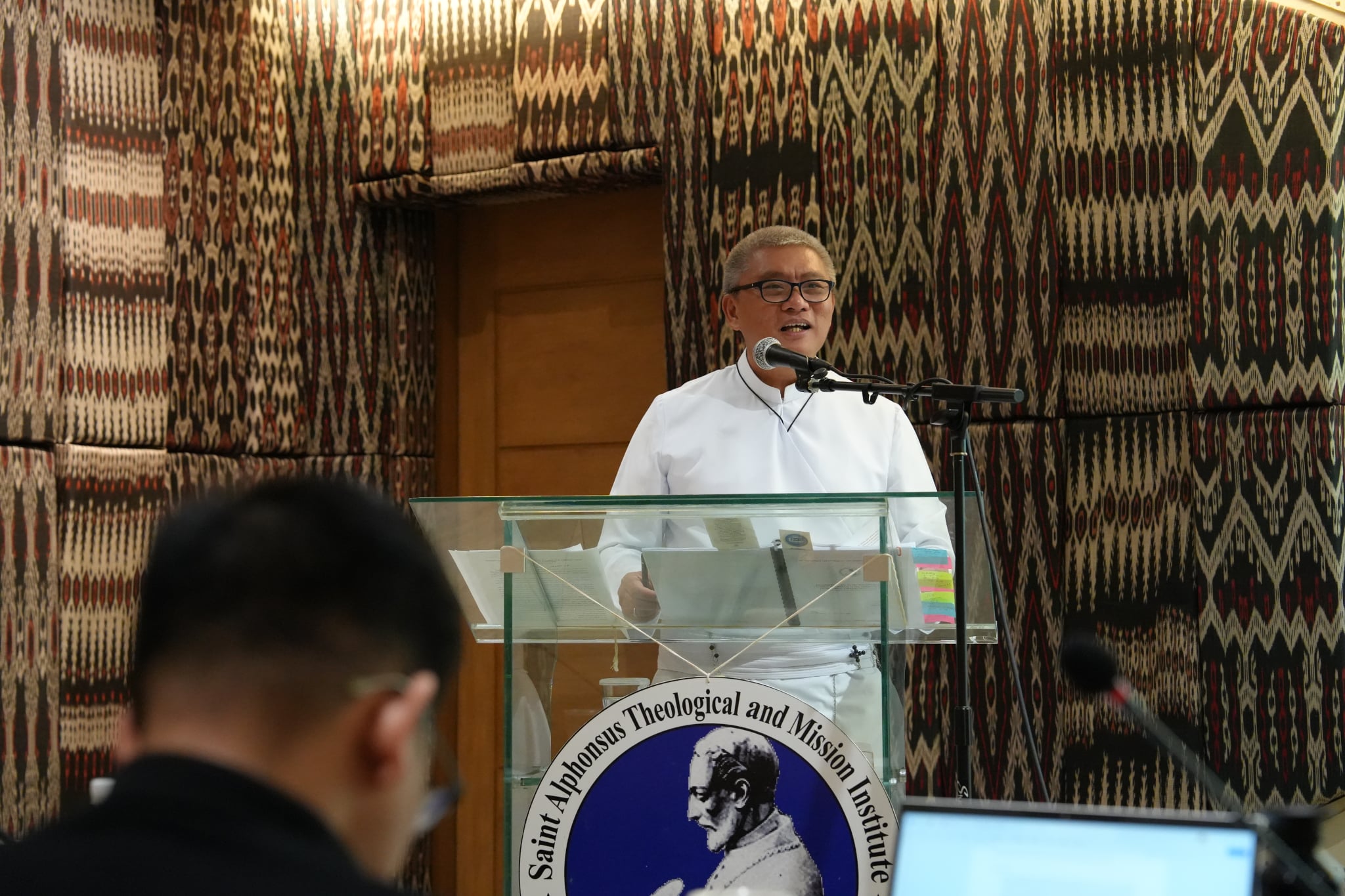
Mentor: Sr. Miriam Alejandrino, OSB, S.Th.D
Panels: Fr. James Kizhakkeyil, CSsR,
Mr. Niel John G. Capidos, STL
Ms. Crescencia C. Gabijan, Ph.D
“Imagine a world where faith guarantees wealth, where anyone who believes will receive treasure beyond measure, with great success and in excellent health. This is the main message of the prosperity gospel. With this, should we be a first-world country by now, with the country’s 78.8% Christian population? The phenomenon of the prosperity gospel has captured my interest, leading to the exploration of the prosperity gospel through the lens of both non-Catholic and Catholic movements, seeking to understand its theological foundations, spiritual appeal, and pastoral implications.
As the Catholic theologians, bishops, and Church leaders have shared reservations, if not objections, on the prosperity gospel and regarded as a distortion of Christian teachings, dangerous, and different, the study aimed to critique these movements in light of Catholic teachings, particularly concerning the nature of grace, suffering, and the true meaning of Christian prosperity. In doing so, it also opens the discussion on the economy of God as revealed in Scripture—an economy rooted in generosity, justice, and solidarity—as contrasted with the economy of the world, particularly capitalism, which often equates success with accumulation, consumption, and individual gain. Since the introduction of the prosperity gospel in the Philippines, it is seen as an alternative to hierarchical Catholicism as a source of moral guidance and an agent of social and political transformation. The presence of the megachurches Victory Christian Fellowship (VCF), Kingdom of Jesus Christ (KJC), Light of Jesus Family, or The Feast, and El Shaddai brought significant changes in the country’s religious, political, and economic landscape.
These renewal movements hold followers from all walks of life. Their popularity is credited to the strong leadership of the charismatic preachers and the so-called miracle power they possess. Their teachings of faith, discipleship, and financial empowerment align with people across social classes due to their simplicity and practicality. Though it has been a familiar topic and concern for sociologists who study the relationship between socio-economic status and the beliefs of the megachurch’s preachers and members, little is written about the prosperity gospel by the Catholics in the Philippines. It is here that the study humbly hopes to contribute. Using the literature-based research as methodology, it examines the works of theologians, sociologists, church leaders, and catechetical materials that address both the theological and practical dimensions of prosperity teaching. The study’s findings reveal both points of convergence and divergence between the prosperity gospel and Catholic doctrine. While both teachings affirm God’s providence and the value of faith, they differ significantly in how material wealth, suffering, and divine favor are understood and communicated. This study presents areas for meaningful dialogue and discernment, offering insights into how Catholic theology might respond to or even learn from the pastoral strategies and faith expressions found within the prosperity movement.”. -𝐸𝑥𝑐𝑒𝑟𝑝𝑡 𝑓𝑟𝑜𝑚 𝑡ℎ𝑒 𝑝𝑎𝑝𝑒𝑟 𝑜𝑓 𝐵𝑟. 𝑀𝑒𝑙
– – – – –
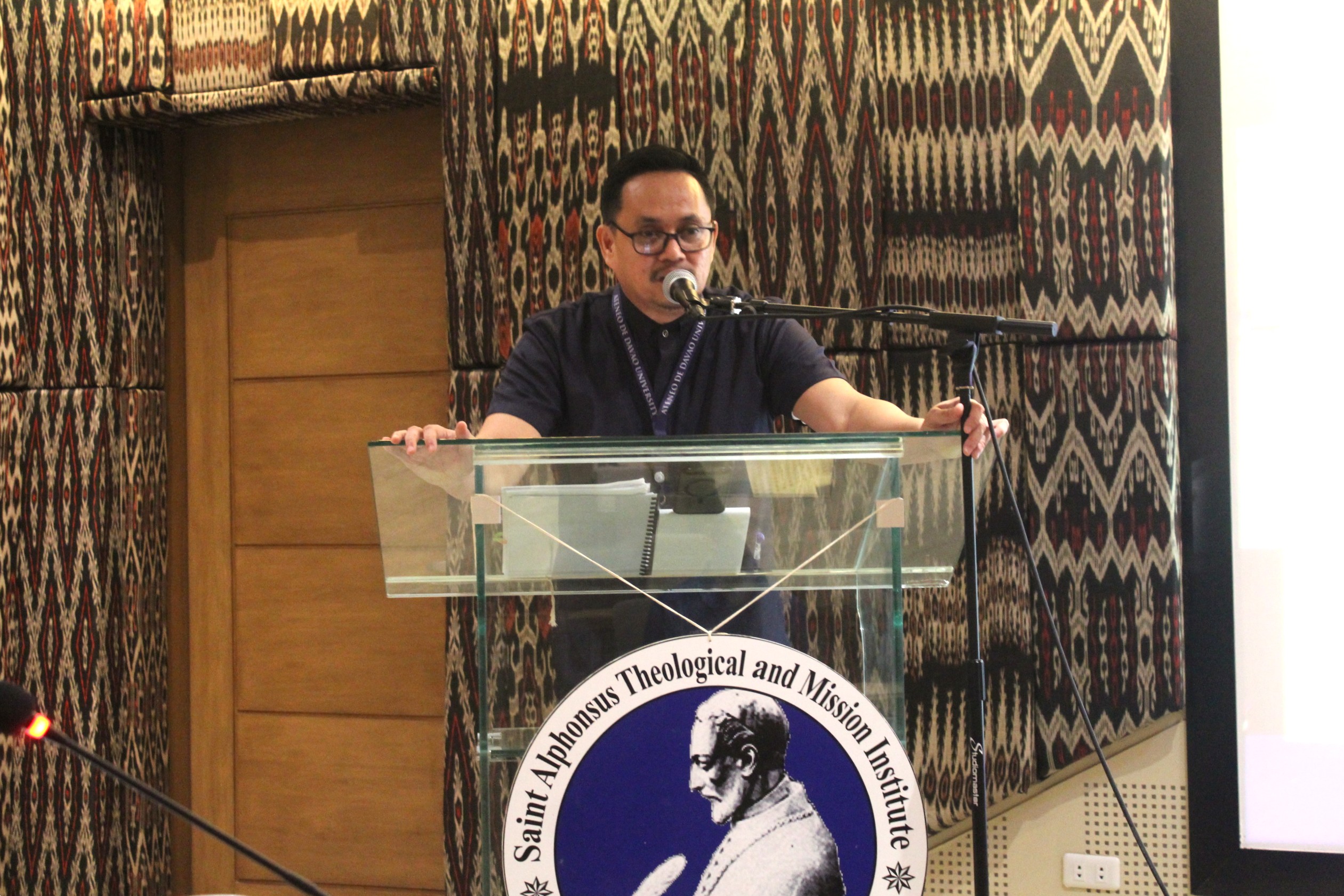
Mentor: Mr. Niel John G. Capidos, STL
Panels: Fr. Edilberto B. Cepe, C.Ss.R., SSL
Fr. Neil J. Badillo, OFM, S.Th.D.
Mr. Lunar T. Fayloga, Ph.D
“As Artificial Intelligence (AI hereafter) technology continues to advance, supposedly bringing about significant improvements to people’s standard of living, the question of the inclusivity of its impact arises: do certain vulnerable groups, such as the Indigenous Peoples (IP hereafter), experience its effects? On what terms can we characterize the relation between AI and the indigenous people? Is there any relation at all between the two that needs to be considered? This theological exploration begins with such provoking questions with a specific context in mind: Mindanao. Home to many Indigenous peoples collectively referred to as “Lumads”, Mindanao has been a site of longstanding struggles and marginalization of various indigenous ethnolinguistic groups. This study looks into these two seemingly distant domains, investigating their divergences and convergences and the possible theological musings that emerge in comparatively considering them.
Even as AI is rapidly developing in the present, the IPs are one of the sectors in our society that are often placed on the sidelines. This stark contrast motivated me to seriously consider these realities, especially in a time when technology is very much a part of how we live. AI is currently affecting our daily lives, and it poses unprecedented challenges to the traditional ways of life of the Indigenous Peoples, especially the Lumads of Mindanao in Southern Philippines. Even though AI has been developed far from the homelands of IPs in Mindanao, it permeates into their lives and affects their cultural practices and communal living.
An example of this would be the use of ChatGPT for study and work by the IPs whom I personally encountered in the missions. Many IP students take advantage of the convenience of research using ChatGPT. The technology has introduced them to a new way of learning that is different from the use of Google or other online research platforms. Similarly, AI is now being utilized by professionals in Indigenous communities for administrative tasks such as the drafting of barangay documents. Both these have demonstrated how the IPs are utilizing this technology in the present, a technology that originated thousands of kilometers away from the homeland of the Indigenous Peoples in Mindanao.
However, as AI continues to be integrated into their lives, understanding this technology is crucial. The Church, which closely journeys with the IPs, must likewise be prepared to address the challenges that come with it. This can be a concern for the IP communities that are already facing challenges and difficulties, as well as a Church that tries to understand and make use of modern technology. While studying both the IPs and AI in detail is a big undertaking, exploring their intersections or divergences is novel and promising. Examining them comparatively can be a good way to gain a deeper understanding of how technology and indigenous wisdom shape the world in the present, and how these intelligences are anchored to real-life situations.
Highlighting AI and the IPs for a theological reflection is a meaningful challenge. These two are rooted in my fascination with computers and my current journey as a Redemptorist. As someone who has a background in Information Technology, I have utilized various technological platforms for evangelization. And now, with the rise of AI, I am drawn out of curiosity for its potential, given its popularity. Also, the charism of my congregation provided opportunities for me to be close to the lives of the people in the far-flung areas of Mindanao. There, I was able to encounter some indigenous groups, like the Manobo, Talaandig, Mandaya, and Mansaca communities of Bukidnon, Bislig, and Maco. These encounters continue to inspire my missionary vocation and move me to advocate for their voices in ways that respect them and their self-determined needs.
Furthermore, these experiences, along with my reflections during my Second Novitiate Program, which took place in the middle of 2024, deepened my commitment to exploring AI and IPs. During this time, the word of Jesus in the Gospel of Mark, “Ephphata,” has deeply compelled me to be opened.” This word of Jesus is a powerful invitation to hear the realities of our time, which are obscured because people’s focus has often been altered as an effect of the use of the internet and social media. Today’s people tend to get distracted by online content regarding the material world. Important things and issues are given less attention in favor of trends. This situation was a significant consideration for me to consider exploring modern technology and the lives of the IPs of Mindanao”. -𝐸𝑥𝑐𝑒𝑟𝑝𝑡 𝑓𝑟𝑜𝑚 𝑡ℎ𝑒 𝑝𝑎𝑝𝑒𝑟 𝑜𝑓 𝐵𝑟. 𝑇𝑦𝑟𝑜𝑛𝑒
– – – – –
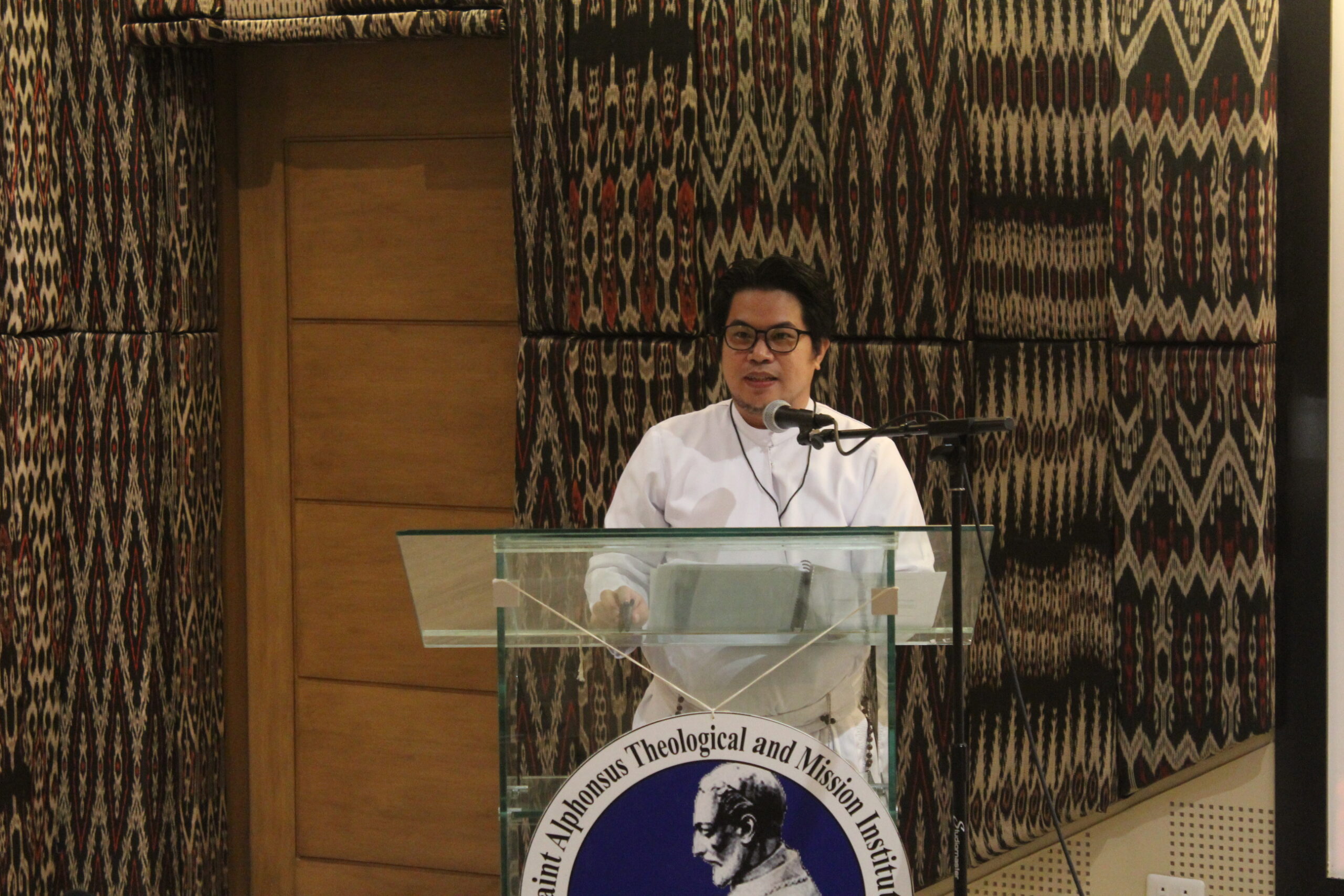
Mentor: Mr. Danilo Agustin Jr., STL
Panels: Fr. James Kizhakkeyil, CSsR,
Mr. Roawie L. Quimba, Ph.D., R.N.
Ms. Crescencia C. Gabijan, Ph.D
“To kill indiscriminately and to label others as objects worthy of being killed is a ruthless act of evil and violence. It is a form of heinous crime that targets vulnerable people, marginalizes the poor, and nurtures violence in the community. The weaponization of a policy or flagship program that aims to kill persons as a means to address societal problems endangers every individual in the community. It legitimizes indiscriminate killings and the inhumane systematized extermination of people considered as ills of society. In legitimizing killings in society as a policy, innocent lives also become vulnerable, with the eventuality being collateral damage in the course of policy implementation. Nevertheless, killing someone should never be seen as a justifiable way to solve social issues, regardless of how serious the reasons are. The aim should always be to protect and save lives while creating spaces for transforming oneself and preserving human dignity and life.
Furthermore, society must condemn and denounce the inhumane systems that violate human rights and the dignity of every person. It is a moral imperative that everyone should uphold. When a government promotes a punitive way of addressing its problems, people must speak out and stand against the policies that endanger the lives of many. Promoting human rights and protecting human dignity, including those offenders of the law, doesn’t necessarily mean we tolerate the offender. Instead, it seeks restorative justice that promotes and protects human rights and dignity by observing due process of law. It promotes justice that punishes the offender and aims to restore the person through a correctional process that provides avenues for change and self-redemption. As the famous quotation would say, “We condemn the sin but not the sinner.” When society subscribes to and supports killings and violence, it normalizes a culture of death. It supports the systematic and structural societal evils that demonize and dehumanize humanity.
Violence should never be seen as an effective way of solving societal problems. It will only lead society into an unending cycle of violence and death that never truly resolves the fundamental issues of the community. There would always be a better approach to societal problems that promotes holistically, creating spaces for healing, re-integration, growth, and forgiveness.
Our Christian calling demands that we stand against any violence that disrespects the sanctity of human life, human dignity, and violates human rights. It is our moral obligation to denounce the culture of violence and death that contradicts the will of God and the reign of his kingdom. Ours is to imitate Christ’s love and forgive sinners by giving them a chance to restore their life and dignity as people and children of His Father. God entered the human scene through Christ and made man in his image and likeness, affirming and bestowing us our inherent dignity and the sacredness of our human life. It is, therefore, our moral responsibility and Christian duty to uphold human dignity and protect the sanctity of human life as an image bearer of God and as 𝐼𝑚𝑎𝑔𝑜 𝐶ℎ𝑟𝑖𝑠𝑡𝑖.
Through Jesus’ becoming human, God fully embraced our humanity and recognized the sanctity of our human nature. Through the incarnation event, God reaffirmed human dignity and the value of becoming fully human. In magpakatao, we develop the capacity to enter into the world of the other by showing compassion, mercy, empathy, and love. In becoming humane, we will be able to recognize others as fellow human beings possessing the same dignity and sacredness of life.
𝑀𝑎ℎ𝑎𝑙𝑎𝑔𝑎 𝑎𝑛𝑔 𝑚𝑎𝑔𝑝𝑎𝑘𝑎𝑡𝑎𝑜 𝑑𝑎ℎ𝑖𝑙 𝑎𝑛𝑔 𝐷𝑖𝑦𝑜𝑠 𝑚𝑖𝑠𝑚𝑜 𝑎𝑦 𝑛𝑎𝑔𝑝𝑎𝑘𝑎𝑡𝑎𝑜 𝑛𝑎𝑛𝑔 𝑙𝑢𝑏𝑜𝑠 𝑁𝑖𝑦𝑎𝑛𝑔 𝑚𝑎𝑖𝑝𝑎𝑘𝑖𝑡𝑎 𝑎𝑛𝑔 𝑘𝑎𝑛𝑦𝑎𝑛𝑔 𝑎𝑤𝑎’𝑡 𝑝𝑎𝑔𝑚𝑎𝑚𝑎ℎ𝑎𝑙 𝑠𝑎 𝑡𝑎𝑜. 𝑀𝑎ℎ𝑎𝑙𝑎𝑔𝑎 𝑎𝑛𝑔 𝑚𝑎𝑔𝑝𝑎𝑘𝑎𝑡𝑎𝑜 𝑏𝑒𝑐𝑎𝑢𝑠𝑒 𝑖𝑡 𝑤𝑖𝑙𝑙 𝑙𝑒𝑎𝑑 𝑠𝑜𝑐𝑖𝑒𝑡𝑦 𝑡𝑜 𝑏𝑒 𝑚𝑜𝑟𝑒 ℎ𝑢𝑚𝑎𝑛𝑒, 𝑐𝑜𝑚𝑝𝑎𝑠𝑠𝑖𝑜𝑛𝑎𝑡𝑒, 𝑎𝑛𝑑 𝑗𝑢𝑠𝑡. 𝑀𝑎ℎ𝑎𝑙𝑎𝑔𝑎 𝑎𝑛𝑔 𝑚𝑎𝑔𝑝𝑎𝑘𝑎𝑡𝑎𝑜 𝑑𝑎ℎ𝑖𝑙 𝑡𝑢𝑡𝑢𝑟𝑢𝑎𝑛 𝑡𝑎𝑦𝑜 𝑛𝑒𝑡𝑜 𝑛𝑎 𝑚𝑎𝑔𝑖𝑛𝑔 𝑚𝑎𝑘𝑎𝑡𝑎𝑜 𝑠𝑎 𝑎𝑡𝑖𝑛𝑔 𝑝𝑎𝑘𝑖𝑘𝑖𝑡𝑢𝑛𝑔𝑜 𝑎𝑡 𝑝𝑎𝑔𝑝𝑎𝑝𝑎ℎ𝑎𝑙𝑎𝑔𝑎 𝑠𝑎 𝑎𝑡𝑖𝑛𝑔 𝑘𝑎𝑝𝑤𝑎. 𝑀𝑎ℎ𝑎𝑙𝑎𝑔𝑎 𝑎𝑛𝑔 𝑚𝑎𝑔𝑝𝑎𝑘𝑎𝑡𝑎𝑜 𝑑𝑎ℎ𝑖𝑙 𝑛𝑎𝑔𝑖𝑔𝑖𝑛𝑔 𝑡𝑜𝑡𝑜𝑜𝑛𝑔 𝑡𝑎𝑜 𝑡𝑎𝑦𝑜 𝑎𝑡 𝑘𝑖𝑛𝑖𝑘𝑖𝑙𝑎𝑙𝑎 𝑛𝑎𝑡𝑖𝑛 𝑎𝑛𝑔 𝑝𝑎𝑔𝑘𝑎𝑡𝑎𝑜 𝑎𝑡 𝑑𝑖𝑔𝑛𝑖𝑑𝑎𝑑 𝑛𝑔 𝑏𝑎𝑤𝑎𝑡 𝑖𝑠𝑎”. -𝐸𝑥𝑐𝑒𝑟𝑝𝑡 𝑓𝑟𝑜𝑚 𝑡ℎ𝑒 𝑝𝑎𝑝𝑒𝑟 𝑜𝑓 𝐵𝑟. 𝑅𝑒𝑦
– – – – –
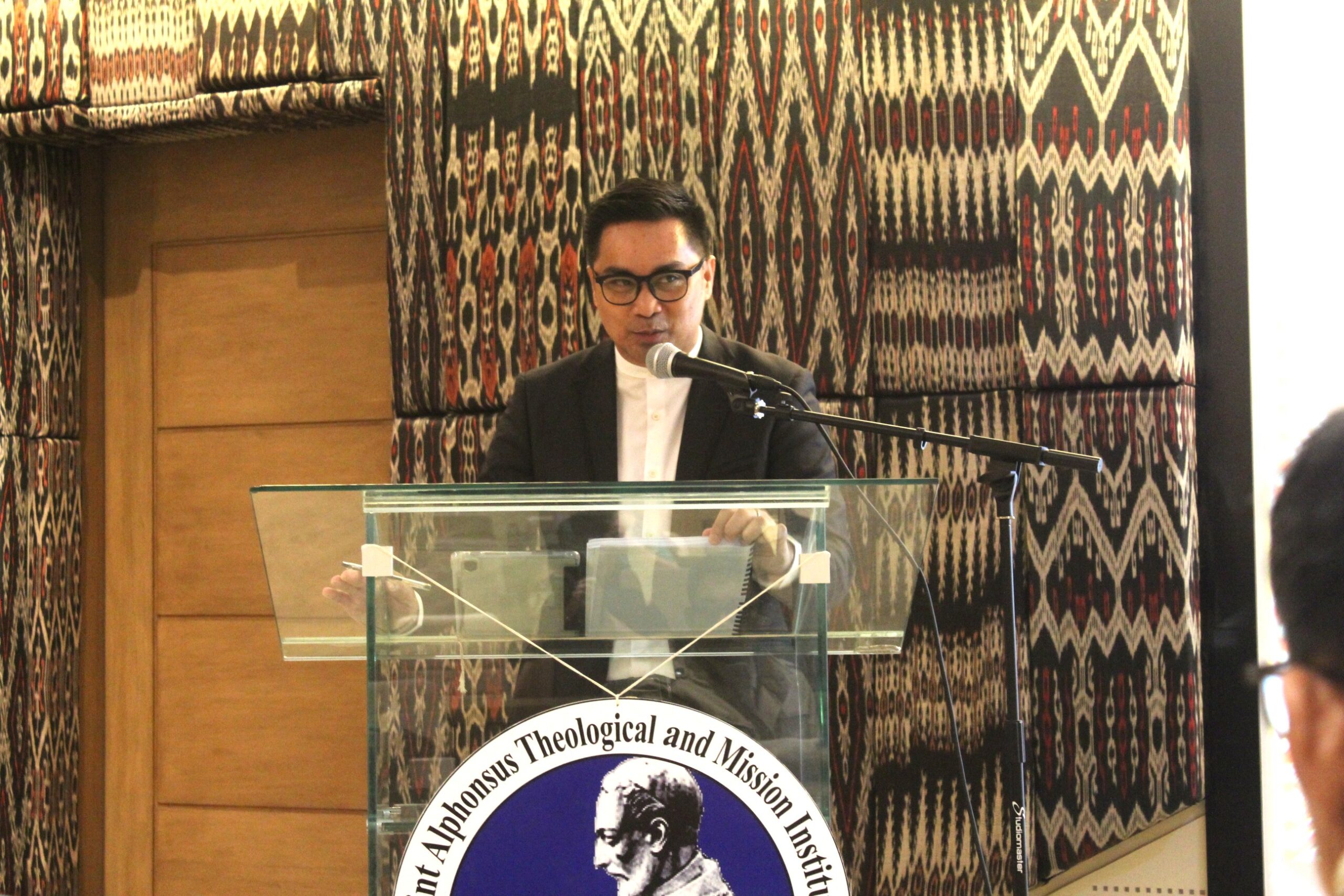
Mentor: Mr. Roawie L. Quimba, Ph.D., R.N.
Panels: Fr. Neil J. Badillo, OFM, S.Th.D
Fr. James Kizhakkeyil, CSsR,
Mr. Noriel R. Rogon, Ph.D
𝐆𝐞𝐧𝐞𝐫𝐚𝐥 𝐈𝐧𝐭𝐫𝐨𝐝𝐮𝐜𝐭𝐢𝐨𝐧
Persecution, defined as the act or practice of persecuting based on attributes such as religion, ethnicity, or political beliefs, represents an enduring shadow in human history. This phenomenon is not merely a relic of the past; it continues to manifest in various forms across the globe, affecting millions and shaping societal dynamics. The persistence of persecution can be attributed to a confluence of historical grievances, power imbalances, and cultural narratives that perpetuate cycles of violence and discrimination.
Historically, persecutions have often been justified through ideological constructs that dehumanize targeted groups. These constructs are deeply embedded in the collective consciousness, making it difficult to break free from the patterns of oppression. For instance, religious persecutions throughout history, such as the Inquisition or the Holocaust, have left indelible marks on societal structures, influencing contemporary attitudes and policies towards marginalized communities.
The psychological impact of persecution creates a legacy of trauma that transcends generations. Survivors and their descendants often carry the weight of historical injustices, leading to a sense of collective victimhood that can fuel further conflict and resentment. This cycle is exacerbated by socio-economic disparities, where marginalized groups are often relegated to the fringes of society, perpetuating their vulnerability to persecution.
In such background, understanding persecution as a chronic shadow requires an holistic approach considering the historical context, socio-political considerations, theological understanding, and the psychological effect on the affected communities. Resolution of these issues is crucial to effective reconciliation, human rights promotion, and finally ending the chronic cycle of persecution that continues to cause suffering in societies across the globe.
𝐁𝐚𝐜𝐤𝐠𝐫𝐨𝐮𝐧𝐝 𝐨𝐟 𝐭𝐡𝐞 𝐒𝐭𝐮𝐝𝐲
As a theological student, exploring the historical and contemporary persecutions of the Moros in Mindanao, as presented in this paper, is essential. This topic intersects with social justice, history, and theology significantly. Understanding the Moros’ historical context is crucial for comprehending the roots of their ongoing struggles, which often have theological dimensions.
The Moros, a Muslim indigenous group in the Philippines, have faced centuries of discrimination and violence. This research not only highlights their plight but also challenges us to examine how faith operates within diverse religious contexts and social justice movements.
Moreover, studying this topic also encourages us to think critically about how religious beliefs fuel conflict and foster peace. By exploring the theological ideas that have shaped historical views of the Moros, theology students can gain a better understanding of how interpretations of scripture can lead to either exclusion or inclusion. This insight is crucial for future religious leaders responsible for advocating for marginalized communities and promoting understanding among different faiths.
Additionally, by studying these current issues, theology students can learn valuable lessons for addressing similar situations around the world. As we prepare for our roles as religious leaders, understanding these dynamics helps us develop empathy and advocate for justice within our congregations and communities. This exploration encourages us to commit to building peace through thoughtful theological reflection that acknowledges past wrongs and seeks ways to reconcile. -𝐸𝑥𝑐𝑒𝑟𝑝𝑡 𝑓𝑟𝑜𝑚 𝑡ℎ𝑒 𝑝𝑎𝑝𝑒𝑟 𝑜𝑓 𝐵𝑟. 𝐾𝑀
–
Missiological Paper Presentation
𝐌𝐢𝐬𝐬𝐢𝐨𝐥𝐨𝐠𝐢𝐜𝐚𝐥 𝐏𝐚𝐩𝐞𝐫 𝐏𝐫𝐞𝐬𝐞𝐧𝐭𝐚𝐭𝐢𝐨𝐧 𝐨𝐟 𝐁𝐫. 𝐈𝐚𝐧 𝐋. 𝐌𝐮𝐫𝐢𝐥𝐥𝐨, 𝐞𝐧𝐭𝐢𝐭𝐥𝐞𝐝: “𝑬𝒙𝒑𝒆𝒓𝒊𝒆𝒏𝒄𝒊𝒏𝒈 𝒕𝒉𝒆 𝑳𝒂𝒘 𝒐𝒇 𝑳𝒐𝒗𝒆 𝒂𝒏𝒅 𝑻𝒓𝒖𝒕𝒉: 𝑰𝒏 𝒕𝒉𝒆 𝑪𝒐𝒏𝒕𝒆𝒙𝒕 𝒐𝒇 𝒕𝒉𝒆 𝑬𝒄𝒄𝒍𝒆𝒔𝒊𝒂𝒍 𝑻𝒓𝒊𝒃𝒖𝒏𝒂𝒍 𝒐𝒇 𝑫𝒂𝒗𝒂𝒐”.
Panels: Sr. Miriam Alejandrino, OSB, S.Th.D
Mr. Lunar T. Fayloga, Ph.D.
Mr. Niel John G. Capidos, STL
“What God has joined together, let not man put asunder.1 This famous line from Scripture encapsulates the Catholic Church’s view and firm stance on marriage. For the Church, marriage is not merely a legal union but a sacrament, a visible sign of an invisible reality,2 manifesting God’s endless outpouring of grace. God continues to draw Himself into the life of every vow made in His sanctuary. For thousands of generations since antiquity, the Church has preserved, guarded, and defended the sanctity and sacramentality of marriage.
The ongoing deliberation over the divorce bill in the Philippine Senate has sparked widespread debate, particularly after it passed the third reading, drawing strong reactions across social media and traditional platforms. Officially titled Senate Bill No. 2443, or the “Dissolution of Marriage Act”3, the proposed law, introduced in September 2023 and supported by the house’s earlier approval of its counterpart, seeks to legalize absolute divorce under specific grounds such as prolonged separation or instances of abuse.
Its progress through Congress has stirred significant division, especially among the Catholic faithful, whose views are deeply influenced by the Church’s teachings on the sanctity and permanence of marriage. As the bill awaits further deliberation and possible enactment, it raises a critical and timely question for Filipino society: how should the state respond to the realities of marital breakdown while preserving the integrity of family life? The outcome of this legislation could profoundly reshape the legal, moral, and cultural landscape surrounding marriage and family in the country and the Catholic Church.
The deliberation of Bill No. 2443 prompts a crucial question: Which should carry more weight—the rising reports of abuse and undesirable outcomes in conjugal living or the enduring and unbreakable bond of matrimony?
In 2024, my formator gave me the opportunity to engage with the Metropolitan Ecclesiastical Tribunal of Davao,4 where I was integrated into the working team as an advocate. My initial task was to review all marriage cases filed between 2015 and 2024, a responsibility I regarded as a privilege. Later, I was invited to assist in handling inquiries related to marriage, which included facilitating catechetical orientations on essential topics such as the sanctity of marriage, its sacramental nature, the distinction between a declaration of nullity and annulment, and the various phases and procedures involved in filing for nullity.
This paper presents a rich experience of encountering various individuals and their marital journeys, ministering to the faithful whose consciences move them to seek truth and healing within the framework of their Christian Catholic vocation. It may seem ironic that many come to the tribunal in search of love, even when their initial intention is separation. It is disheartening that the Tribunal is often perceived merely as an office for breaking marital bonds. The exploration of this Church ministry is timely and necessary, grounded in truth, and love, and aims to debunk the common misconception that the Tribunal’s mission is to dissolve marriages.
In truth, the Tribunal exists to serve the Church’s ultimate mission: the salvation of souls.5 Its purpose is not to destroy, but to discern—to bring clarity, offer pastoral guidance, and uphold justice through the light of truth”. -𝐸𝑥𝑐𝑒𝑟𝑝𝑡 𝑓𝑟𝑜𝑚 𝑡ℎ𝑒 𝑝𝑎𝑝𝑒𝑟 𝑜𝑓 𝐵𝑟. 𝐼𝑎𝑛